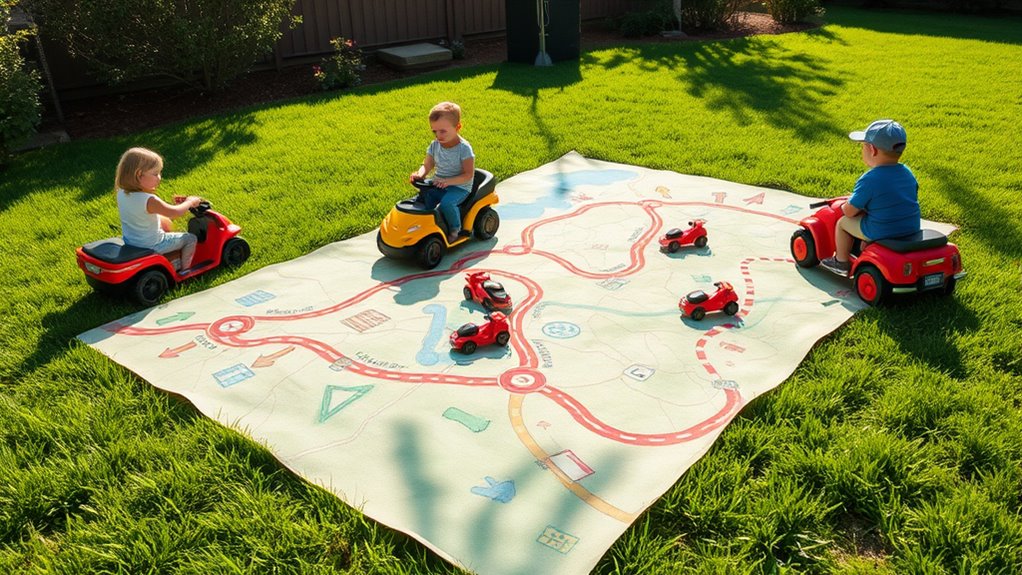

Using ride-on toys is a fun way to teach kids mapping and navigation skills. You can introduce simple maps with landmarks they recognize, encouraging them to match real objects to map symbols. During rides, give directions like “turn left” or “go straight” to develop their understanding of spatial relationships. Incorporate technology or route planning activities to boost problem-solving. Keep exploring these playful methods to help your child become confident in navigation!
Key Takeaways
- Use simple maps with landmarks to help children match virtual visuals with real-world objects during rides.
- Incorporate ride-on activities that follow map features, reinforcing spatial awareness and landmark recognition.
- Provide directional instructions like “turn left” or “go straight” to teach navigation skills through guided riding exercises.
- Utilize tablet apps or printed maps to plan routes and challenge children to replicate them on their ride-on toys.
- Turn riding into an interactive learning experience that improves spatial reasoning, problem-solving, and map interpretation skills.
Have you ever thought about how ride-on toys can be more than just fun? These toys can become powerful tools for teaching your child valuable skills like mapping and navigation. By turning a simple ride around the yard or park into a learning experience, you can introduce concepts like virtual maps and directional skills in an engaging way. Kids love the excitement of riding, so why not use that enthusiasm to help them understand how maps work and how to find their way?
Start by introducing your child to basic map concepts. Use simple drawings or printed virtual maps of your local area, highlighting familiar landmarks like trees, benches, or swings. As they ride their toy, encourage them to look at the map and match it to what they see around them. For example, if they’re approaching a tree on their ride, ask, “Can you find the tree on the map?” This helps them connect the visual representation with real-world objects, strengthening their understanding of spatial relationships. Over time, as they become more comfortable, you can expand to more detailed maps, adding symbols or labels to make navigation clearer.
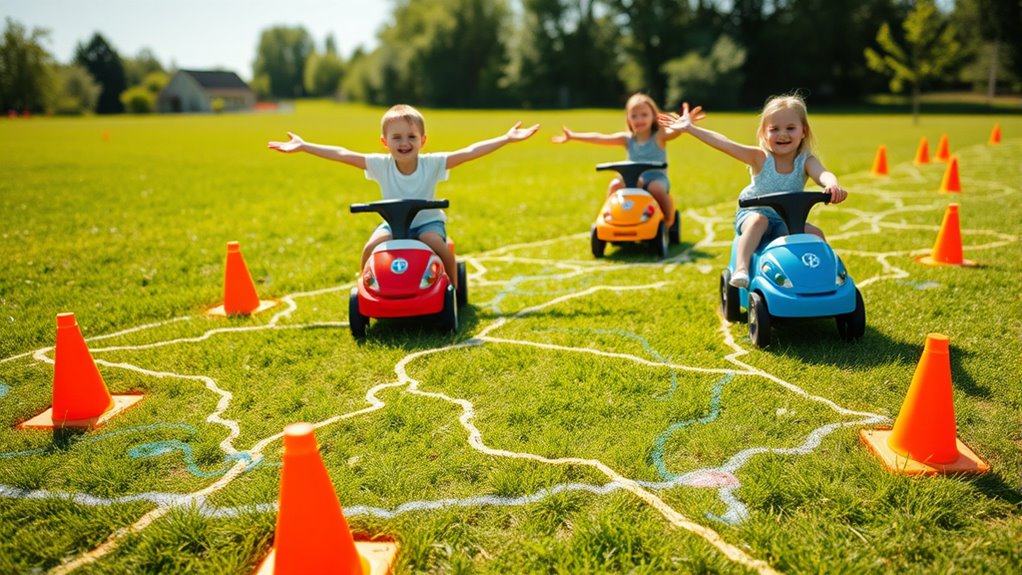
Using ride-on toys provides a natural way to develop directional skills. As your child rides, give simple instructions like “turn left at the slide” or “go straight past the bench.” This not only makes the activity fun but also teaches them how to follow directions, interpret positional cues, and understand basic compass points. You can set up a mini obstacle course or a route with specific turns, encouraging your child to follow the path on the map while riding. This hands-on approach transforms abstract navigation concepts into concrete experiences, helping your child internalize the skills more effectively.
Incorporating virtual maps into play can also introduce technology into learning. Use tablet apps or printed maps that simulate real-world navigation. Challenge your child to find their way from one point to another on the map, then try to replicate that route on their ride-on toy. This kind of activity boosts their confidence in understanding spatial layouts and improves their ability to plan routes ahead of time. Additionally, research shows that engaging in such activities can foster spatial reasoning and enhance their overall problem-solving skills, making the learning process even more beneficial. As they practice, they’ll see how maps are useful tools for exploring new places and finding their way, turning a simple ride into an adventure of discovery.
As an affiliate, we earn on qualifying purchases.
Frequently Asked Questions
What Safety Precautions Should I Take With Ride-On Toys?
You should always prioritize safety by guaranteeing your child wears a helmet safety every time they play with ride-on toys. Supervised play is essential to prevent accidents and respond quickly if needed. Make sure the play area is free of obstacles and hazards, and teach your child how to operate the toy responsibly. Regularly check the toy’s condition to ensure it’s in good shape, promoting safe and enjoyable playtime.
How Can I Adapt Lessons for Different Age Groups?
You can adapt lessons for different age groups by tailoring activities to their developmental levels. For younger children, introduce simple mapping with basic landmarks and easy navigation challenges. For older kids, incorporate more complex routes and problem-solving tasks. Always modify the difficulty to match their skills, providing age-appropriate challenges that keep them engaged while reinforcing mapping concepts. This approach ensures everyone learns effectively and stays safe during the activity.
Are There Recommended Ride-On Toy Brands for Educational Use?
Imagine a guiding star illuminating your child’s learning journey. When choosing ride-on toy brands, look for those with strong educational features that foster exploration, problem-solving, and spatial awareness. Trusted brands like Power Wheels, Little Tikes, and Peg Perego often incorporate these elements. These brands can turn playtime into a meaningful adventure, helping kids develop essential skills while igniting their curiosity and love for discovery.
How Do I Assess a Child’s Understanding of Navigation Skills?
You assess your child’s comprehension of navigation skills by observing their ability to follow directions and recognize landmarks during play. Use assessment techniques like asking them to explain routes or find specific locations on a map. Watch for their confidence and problem-solving skills as they navigate. Encourage them to describe their thinking process, which helps you gauge their understanding and identify areas needing reinforcement.
Can Ride-On Toys Be Used Indoors Safely?
Yes, ride-on toys can be used indoors safely if you guarantee proper indoor safety measures. Clear the area of obstacles and sharp objects to reduce navigation challenges, and supervise your child at all times. Make sure the toy is suitable for indoor use, with smooth, non-slip wheels. Regularly check the toy for maintenance issues. These steps help create a safe environment where your child can explore and develop navigation skills indoors.
Conclusion
Think of ride-on toys as your child’s first GPS, guiding them through a miniature world of discovery. As they navigate, they build essential mapping skills—like plotting a path through a maze. With each turn and obstacle, they’re laying down the foundation for future exploration. Just like a tiny explorer charting new territories, your child learns to read maps and follow directions, turning playtime into an adventure that sparks curiosity and confidence for bigger journeys ahead.