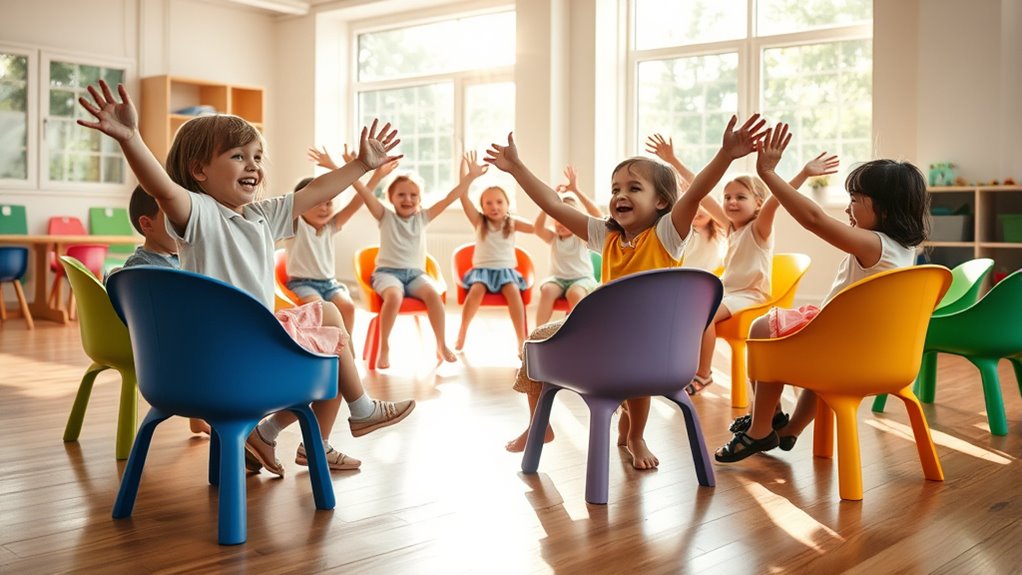

Transform your circle time into an exciting, mobile activity by using wheeled platforms or scooters to create a moving circle. This approach promotes cooperation, improves motor skills, and encourages social interaction while making learning fun. Include movement commands, music, and cognitive challenges like counting or words to keep children engaged and active. As they navigate around, they build balance and teamwork. Curious how to turn this into a seamless, engaging experience? Keep exploring for more ways to energize your sessions.
Key Takeaways
- Incorporate wheeled platforms into circle games to develop balance, coordination, and spatial awareness while promoting teamwork.
- Design movement challenges that combine physical activity with cognitive tasks like counting or naming objects.
- Use musical cues and simple instructions to keep children engaged and facilitate seamless transitions during movement activities.
- Foster social skills by encouraging children to cheer, support peers, and celebrate efforts in a lively, inclusive environment.
- Adapt game themes and movement rules to enhance learning, motivation, and safety during “Circle Time on Wheels.”
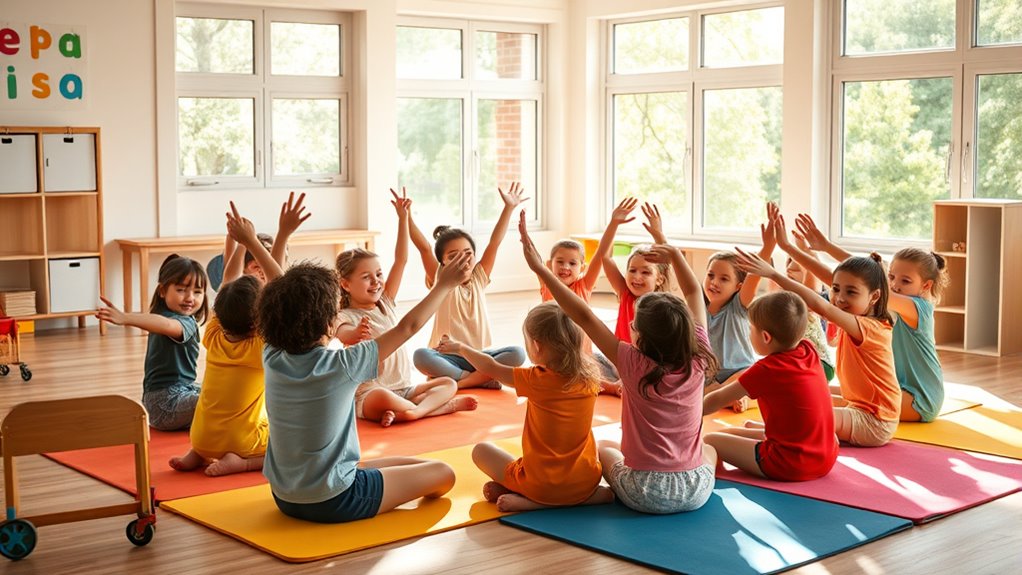
Movement games are a fantastic way to keep kids active, engaged, and healthy. They turn physical activity into fun, interactive experiences that boost both motor skills and social development. One creative approach is to combine movement games with the concept of a moving circle, which naturally encourages cooperation and focus. Imagine gathering children in a large, open space and forming a circle. As the leader, you can introduce simple commands like “jump,” “clap,” or “touch your toes,” and kids respond by moving accordingly within the circle. This keeps everyone involved and attentive, fostering a sense of unity and fun.
Movement games with a moving circle promote cooperation, focus, and fun while encouraging active, social, and motor skill development.
Using a circle on wheels takes this idea even further. You can set up small, wheeled platforms or scooters for the children to sit on or stand on, creating a mobile circle that kids can navigate around the room. This setup transforms a simple game into an exciting adventure, where children learn balance, coordination, and spatial awareness while moving together. For example, you might call out different movement challenges: “roll to the left,” “spin around,” or “move forward.” As kids follow these commands, they develop core motor skills and the ability to listen and respond quickly. This kind of game also encourages teamwork, as kids learn to coordinate their movements with others in the circle, fostering cooperation and patience.
Another effective variation involves incorporating educational themes into your circle games. You could ask children to say a word or answer a question before moving, blending cognitive and physical activity seamlessly. For instance, before performing a jump, they might have to say the alphabet or count to ten. This approach helps reinforce learning while keeping the energy high. You can also introduce musical elements, like playing a song and asking kids to move in different ways when the music stops, ensuring they stay alert and engaged. Additionally, integrating movement rules based on safety and efficiency can help keep the game fun and injury-free.
Throughout these games, your role is to maintain a lively, supportive atmosphere. Keep instructions clear and simple, and encourage children to cheer each other on. Celebrate their efforts, regardless of whether they perform perfectly, and emphasize fun over competition. Movement games on wheels or with a moving circle are versatile tools that promote physical development, social skills, and cognitive growth. They turn a typical circle time into an exciting, dynamic experience that kids will look forward to, helping them stay active and joyful while learning important skills along the way.
children's wheeled platforms for circle time
As an affiliate, we earn on qualifying purchases.
As an affiliate, we earn on qualifying purchases.
Frequently Asked Questions
How Can I Adapt Movement Games for Children With Disabilities?
You can adapt movement games for children with disabilities by tailoring activities to their individual needs and abilities. Use visual cues, simplified tasks, or assistive tools to make participation easier. Incorporate flexibility into rules, allowing children to join at their comfort level. Encourage peer support and positive reinforcement to boost confidence. Focus on fun and inclusion, ensuring every child feels valued and engaged, regardless of their physical or developmental challenges.
What Safety Precautions Are Recommended During Active Circle Time?
Did you know that 1 in 7 children experiences some form of disability? During active circle time, you should guarantee the area is free of hazards, supervise closely, and adapt activities to each child’s ability. Use soft mats for cushioning, encourage gentle movements, and check equipment regularly. By staying attentive and flexible, you create a safe environment that promotes fun and learning for all children.
How Do Movement Games Support Social-Emotional Development?
Movement games boost your social-emotional skills by encouraging cooperation, turn-taking, and communication. You’ll learn to read others’ cues, share space, and manage emotions like excitement or frustration. These activities foster a sense of belonging and trust, helping you feel more connected and confident. As you participate, you develop empathy and patience, which are essential for healthy relationships and emotional resilience in everyday life.
Can Movement Games Be Incorporated Into Virtual or Remote Learning?
Yes, you can incorporate movement games into virtual or remote learning. You might ask students to follow simple movement prompts on camera, like stretching or jumping, or use online tools to create interactive challenges. Encourage kids to move around their space and share their actions. This keeps them engaged, promotes physical activity, and supports social-emotional skills even when they’re learning from home.
What Are Some Ways to Modify Games for Different Age Groups?
Think of age groups as different chapters in a book—you need to tailor your story accordingly. To modify games, simplify rules for younger kids, using bright visuals and gentle movements. For older children, add complexity with teamwork challenges or strategic elements. You can also extend or shorten games based on attention spans. Adjusting the pace and difficulty keeps everyone engaged, ensuring each age group learns and has fun in their unique way.
Conclusion
By incorporating movement games into circle time, you’ll see kids become more engaged and enthusiastic to learn. These activities boost coordination, social skills, and confidence—all while having fun. Think of it as a win-win: children develop essential skills through play, making learning feel like an exciting adventure. So, go ahead, try these games and watch how movement transforms your classroom into a lively, interactive space where kids thrive and enjoy every moment.