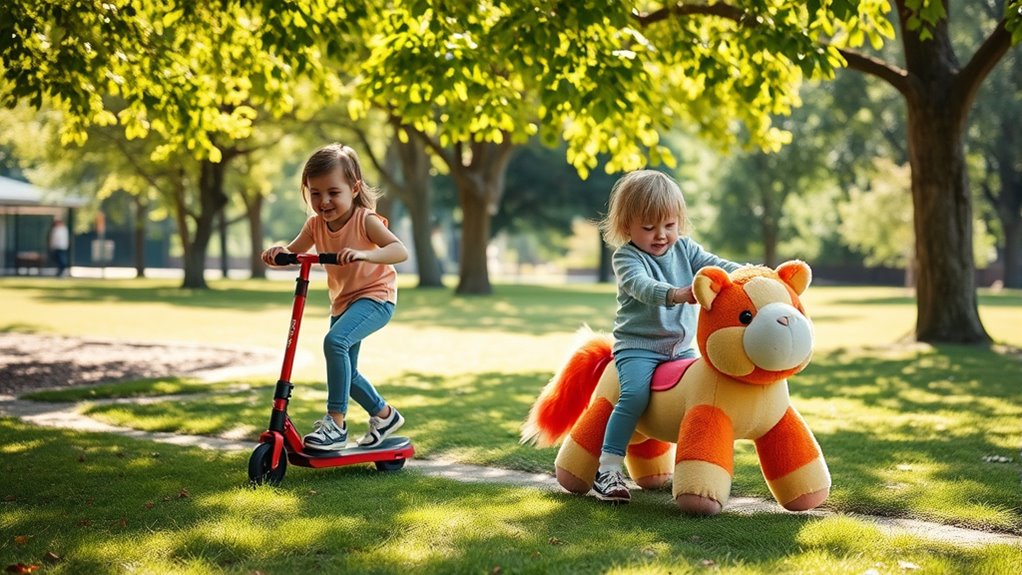

When choosing between scooter boards and ride-ons, consider their sensory benefits. Scooter boards offer intense vestibular stimulation through multi-directional movement, helping active children develop balance, spatial awareness, and proprioception. Ride-ons provide steady tactile input and controlled motion, ideal for children seeking calming sensory input or needing stability. Each supports different sensory and motor skills; understanding their unique benefits can help you select the best fit. Keep exploring to discover how these toys can best support your child’s development.

Turn the school run and nap time into listening time
- Thousands of audiobooks, podcasts and originals
- Listen on your phone, tablet or Echo — also offline
- Cancel anytime
Key Takeaways
- Scooter boards provide intense vestibular and proprioceptive input through multi-directional movement and balancing activities.
- Ride-ons offer calming tactile and vestibular sensations via seated stability and controlled steering.
- Scooter boards stimulate dynamic sensory input, ideal for sensory seekers needing active engagement.
- Ride-ons promote steady sensory feedback, suitable for children seeking calming and organized movement.
- Both foster sensory development, but scooter boards encourage complex sensory processing, while ride-ons focus on stability and grounding.
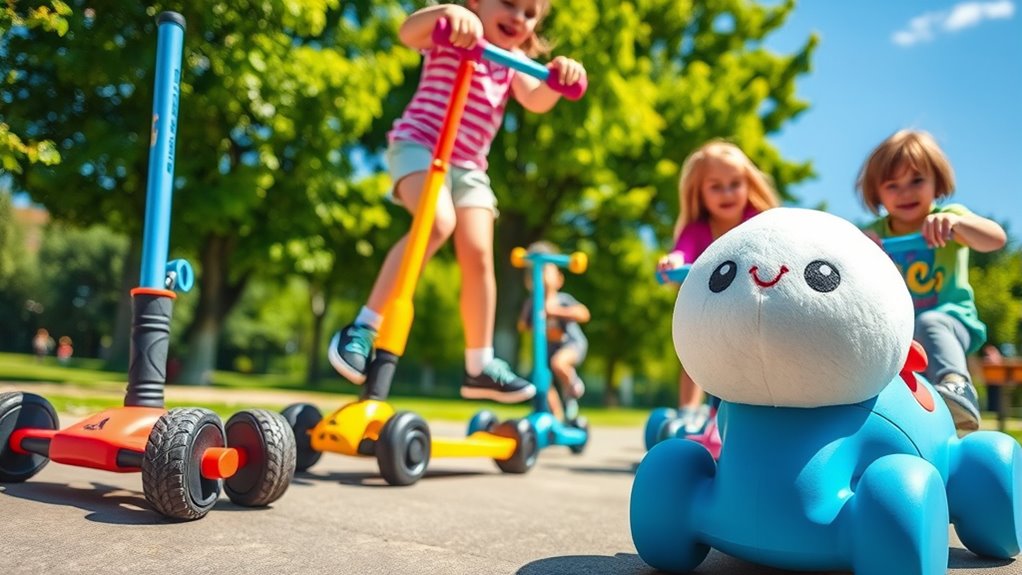
When choosing between scooter boards and ride-ons for children, understanding their differences can help you make the best decision. Both toys promote active play, but they offer distinct sensory experiences that can benefit your child’s development in unique ways. Scooter boards are typically low to the ground, flat platforms with wheels, allowing children to push off, balance, and maneuver freely. This setup encourages proprioceptive and vestibular input as kids push with their hands and feet, helping them develop core strength and spatial awareness. The tactile sensation of gripping the deck and feeling the wheels beneath adds to sensory stimulation, fostering better body awareness. Because children can move in multiple directions—forward, backward, or sideways—scooter boards support complex motor planning and coordination. The need to balance while steering or shifting weight challenges their vestibular system, which is essential for overall sensory integration.
Ride-ons, on the other hand, usually resemble miniature vehicles or animals that children sit on and propel themselves by pushing with their feet or, in some cases, by using a steering mechanism. These toys primarily provide vestibular and tactile input through the sensation of sitting and balancing on a raised surface. The act of gripping a steering wheel or handles adds an additional tactile dimension, engaging the tactile and proprioceptive senses. Ride-ons tend to promote more controlled movement, helping children develop gross motor skills like pushing and steering, but they often offer less variety in movement directions compared to scooter boards. The seated position offers a different kind of sensory feedback, emphasizing stability and balance while still engaging core muscles. For children who need more calming or focused sensory input, ride-ons can be especially beneficial because they provide a steady, predictable experience that still encourages movement but with less risk of overwhelming vestibular input.
Both toys support sensory development, but they do so in different ways. Scooter boards foster dynamic, multi-directional movement and intense vestibular stimulation, which can help children with seeking sensory input or those needing to improve their balance and coordination. Ride-ons tend to offer a more stable, grounding experience, making them suitable for children who might be overwhelmed by rapid or unpredictable movements. When choosing, consider your child’s sensory needs and preferences. If they thrive on active, unpredictable play that challenges their balance and coordination, a scooter board might be the best fit. If they prefer more controlled, calming activity that still encourages movement, a ride-on could be more appropriate. Both options can support sensory development, but understanding their unique benefits will help you select the toy that best suits your child’s sensory profile and developmental goals.
children's scooter board for sensory development
As an affiliate, we earn on qualifying purchases.
As an affiliate, we earn on qualifying purchases.
Frequently Asked Questions
Which Sensory Benefits Are Most Unique to Scooter Boards?
You’ll find that scooter boards uniquely stimulate your vestibular system through balancing and steering, promoting spatial awareness and coordination. The tactile feedback from gripping handles and feeling the surface beneath you enhances your proprioception. Additionally, the movement and speed provide dynamic input, helping you develop better body awareness. These sensory benefits make scooter boards especially effective for improving motor skills and sensory integration in a fun, engaging way.
How Do Ride-Ons Support Balance Development?
Ride-ons support balance development like a gentle wave guiding a boat, helping you build stability over time. As you push and steer, you engage core muscles and improve coordination. These toys encourage you to maintain upright posture and adjust your weight, fostering natural balance skills. Unlike scooter boards, ride-ons give you a grounded experience, making it easier to develop confidence in balancing while having fun.
Are Scooter Boards Better for Gross Motor Skills?
Yes, scooter boards are often better for developing gross motor skills because they encourage movement and coordination. You’ll find that kids actively push, steer, and balance on them, which strengthens large muscle groups. Unlike ride-ons, scooter boards promote more dynamic activities like jumping on and off, turning, and propelling themselves forward, all of which enhance overall coordination, balance, and strength. This active engagement makes scooter boards a great choice for gross motor development.
Do Ride-Ons Improve Spatial Awareness More Than Scooter Boards?
Ride-ons can improve spatial awareness more than scooter boards because they encourage your child to navigate and judge distances while moving forward, backward, or around obstacles. As they steer and control the ride-on, they develop a better understanding of space and their body in relation to their environment. Scooter boards focus more on gross motor skills and coordination, whereas ride-ons actively promote spatial perception through directional movement.
Can Both Toys Be Used for Sensory Integration Therapy?
Yes, both toys can be used for sensory integration therapy. You can incorporate ride-ons and scooter boards to help improve your child’s sensory processing skills by encouraging movement, balance, and body awareness. Using them together offers a variety of sensory inputs, making therapy sessions more engaging and effective. Just guarantee you supervise your child to prevent falls and tailor activities to their specific sensory needs.
Conclusion
So, whether you prefer the thrill of zooming on a scooter board or the steady glide of a ride-on, both offer unique sensory perks. Ironically, what seems like simple fun might just be your brain’s way of giving your senses a much-needed workout. Just imagine, in chasing after the tiniest sensations, you might find yourself more grounded—literally—than ever before. Who knew that a little ride could turn into a surprisingly enriching adventure?
Halloween Picks
halloween
As an affiliate, we earn on qualifying purchases.