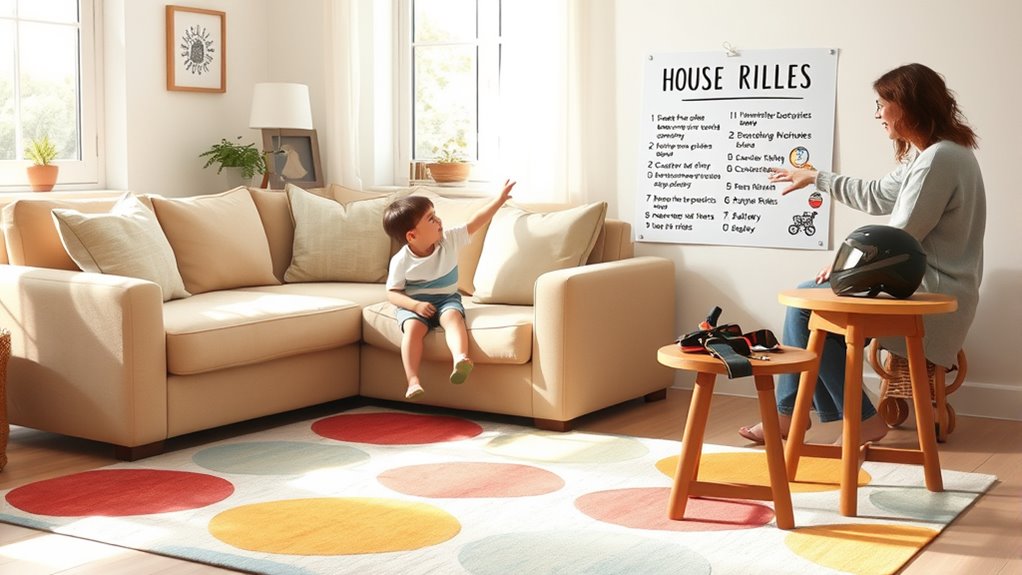

Setting clear boundaries for riding helps create a safe and predictable environment where kids can learn responsibility and enjoy their activities confidently. By establishing non-negotiable safety gear, defining specific riding areas like the driveway or backyard, and explaining the reasons behind these rules, you reduce accidents and promote responsible choices. Enforcement should be calm and consistent, fostering trust and accountability. Keep going to discover effective strategies for making riding safer and more enjoyable for everyone.
Key Takeaways
- Clearly define safe riding areas, such as driveways and backyard, to prevent wandering into dangerous zones.
- Use simple, straightforward language to explain the importance of boundaries and safety rules.
- Enforce boundaries consistently to foster trust and promote responsible riding behavior.
- Establish non-negotiable safety gear requirements like helmets and knee pads for all riders.
- Reinforce safety guidelines regularly to help children understand and internalize safe riding practices.
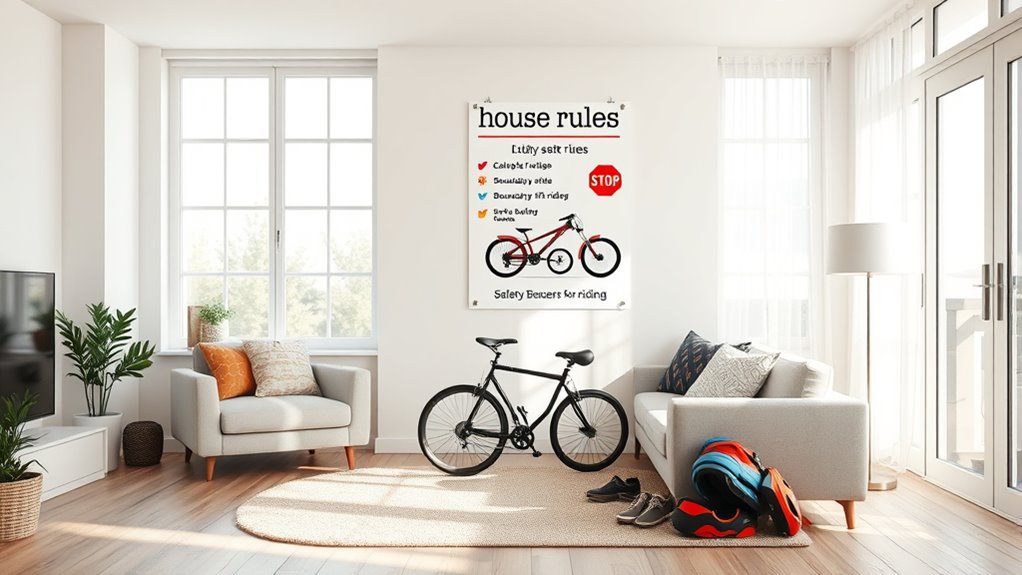
Have you ever wondered how clear house rules can make daily life smoother? Setting boundaries isn’t just about establishing limits; it’s about creating a safe and predictable environment where everyone knows what to expect. When you define specific rules, you reduce misunderstandings and conflicts, making routines more efficient and less stressful. For instance, if everyone knows that helmets are mandatory before riding bikes or scooters, you’re more likely to prevent injuries. Clear rules act as a roadmap, guiding behavior and encouraging accountability, which is especially important during activities like riding, where safety is paramount.
Clear house rules create a safe, predictable environment, reducing conflicts and promoting accountability during activities like riding.
By establishing rules early, you help children understand the importance of safety measures. When you communicate that helmets, knee pads, and proper footwear are non-negotiable, you’re teaching them to prioritize their well-being. It’s not about instilling fear but about fostering responsibility. When kids understand the reasons behind these boundaries, they’re more likely to respect them. Reinforcing rules consistently shows that safety isn’t optional, and it’s a shared responsibility. This consistency builds trust and helps children internalize the importance of following safety guidelines without feeling punished or unfairly treated.
Furthermore, setting house rules about riding can prevent accidents before they happen. When you clearly outline where riding is permitted—such as designated driveways or backyard areas—you minimize the chances of children accidentally wandering into busy streets or dangerous zones. Explaining the reasons behind these boundaries helps kids grasp why rules exist, making them more likely to follow them willingly. For example, you might say, “We only ride in the driveway because the street can be dangerous. We want to keep you safe.” When rules are explained in a calm, straightforward manner, children tend to accept them more readily.
In addition, rules about riding help foster a sense of discipline and self-control. When children learn to adhere to boundaries consistently, they develop habits that carry over into other areas of life. Setting expectations about when and where riding is appropriate teaches them to make responsible decisions. It also reduces the likelihood of disputes over boundaries, because everyone understands what’s expected. As a parent or guardian, your role is to enforce these rules kindly but firmly, showing that safety and respect are priorities. Recognizing the importance of safety guidelines and how they impact behavior can further enhance your approach to setting boundaries.

Kids Bike Helmet Set,CPSC Certified with Knee Elbow Wrist Pads Guards,Toddler Adjustable Blue Helmet for Ages 2-14 Girl Child,Sports Protective Gear Set for Bicycle Skate Scooter Rollerblading
- 7-in-1 Protective Gear Set: Includes helmet, elbow, wrist, and knee pads
- Vented & Comfortable Design: 19 air vents for cooling and soft padding
- Adjustable & Soft Fit: Customizable size with comfortable chin pad
As an affiliate, we earn on qualifying purchases.
As an affiliate, we earn on qualifying purchases.
Frequently Asked Questions
How Often Should House Rules Be Reviewed and Updated?
You should review and update your house rules at least every six months or whenever there’s a significant change in your riding environment or team. Regular reviews help guarantee rules stay relevant and effective. If you notice issues or new safety concerns, update them immediately. Keep open communication with everyone involved, and encourage feedback to maintain a safe, clear, and consistent riding environment that adapts to your needs.
What Are Common Consequences for Rule Violations?
Common consequences for rule violations include warnings, temporary restrictions, or suspension from riding activities. You might also implement extra training sessions or require the violator to complete a safety refresher course. In serious cases, you could enforce removal from the riding program. These consequences help reinforce rules and guarantee safety. You should clearly communicate them beforehand so everyone understands the outcomes of not following the established boundaries.
How Do I Ensure All Family Members Follow the Rules?
Ever wondered how to keep everyone on the same page? You guarantee all family members follow the rules by clearly communicating expectations and explaining why they matter. Consistency is key—enforce rules fairly and promptly. Involve everyone in creating the rules so they feel invested. Positive reinforcement, like praise or rewards, encourages compliance. Do you reward good behavior enough? Making rules understood and valued helps foster cooperation and safety for all.
Should Rules Differ for Different Age Groups?
Yes, rules should differ for different age groups. You recognize that younger children need simpler, more concrete rules to understand safety, while older kids can handle more complex guidelines and responsibilities. By tailoring rules to each age group, you guarantee safety and comprehension. You also promote independence gradually, helping each family member learn and respect boundaries appropriate for their development, making riding safer and more enjoyable for everyone.
How Can I Handle Disagreements About House Rules?
When disagreements about house rules arise, you should listen actively to understand everyone’s perspective. Stay calm and avoid raising your voice. Clearly explain your reasoning, and encourage open dialogue. Find common ground or compromise when possible. If needed, revisit the rules together and adjust them to suit everyone’s safety and comfort. Remember, consistent communication and respect help resolve conflicts and create a safer, more cooperative environment.
Conclusion
By setting clear, consistent house rules, you create a safer, more supportive space for riding. Boundaries build bravery, bolster balance, and boost confidence. When rules are right and routines are reinforced, riders respect boundaries and reduce risks. Remember, a disciplined domain doesn’t diminish fun; it fuels freedom. Foster focus, form firm foundations, and follow through. With well-placed rules, you’ll foster a safer, stronger, and more successful riding experience—because safety starts with setting smart, steady standards.