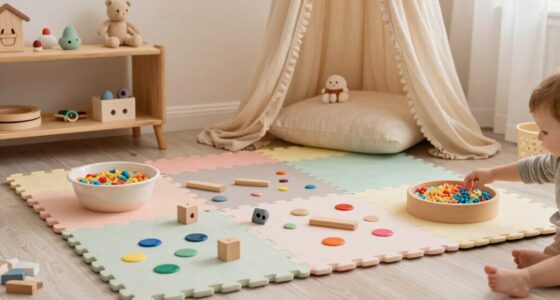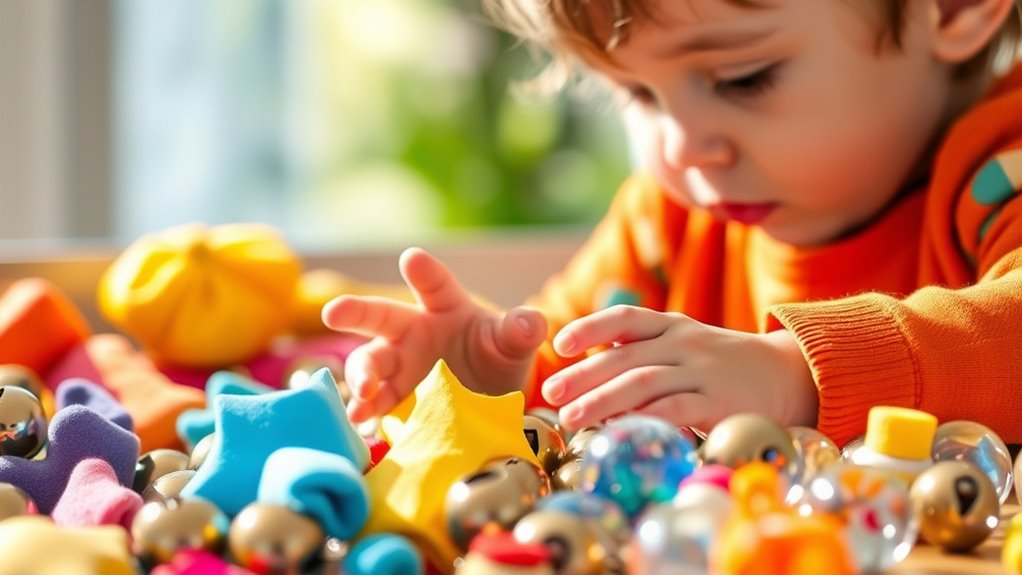

Sensory play using touch, sound, and sight is key to supporting your child’s language development. By engaging in hands-on exploration with textured objects and various sounds, you help your child connect words to their sensory experiences. Descriptive language during these activities boosts vocabulary and comprehension. Active participation encourages your child to verbalize observations, building their communication skills. Keep exploring different textures and sounds—there’s always more ways to make sensory play a powerful language tool.

Turn the school run and nap time into listening time
- Thousands of audiobooks, podcasts and originals
- Listen on your phone, tablet or Echo — also offline
- Cancel anytime
Key Takeaways
- Sensory play links tactile, auditory, and visual stimuli to enhance vocabulary and deepen language comprehension.
- Incorporating textured objects and sounds encourages descriptive language and active verbalization.
- Combining sight, touch, and sound creates multisensory experiences that reinforce word associations.
- Open-ended questions during sensory exploration promote curiosity, conversation, and expressive language skills.
- Engaging children in playful, active sensory activities supports overall language development and cognitive growth.

Sensory play is a powerful tool for supporting language development in young children. When you encourage tactile exploration and provide rich auditory stimuli, you’re helping your child connect words to their experiences, which deepens their understanding and vocabulary. Tactile exploration involves allowing your child to touch, feel, and manipulate different textures, such as soft fabrics, rough surfaces, or smooth objects. As they explore these textures, you can introduce descriptive words like “soft,” “grainy,” or “slippery,” helping your child associate sounds with sensations. For example, running your fingers over a bumpy surface while saying, “This feels rough,” reinforces both the tactile sensation and the vocabulary. Similarly, providing a variety of objects with different textures stimulates their curiosity and encourages them to verbalize their observations, strengthening their language skills through active engagement. Incorporating multisensory learning strategies further enhances their ability to process and retain new words effectively.
Auditory stimuli are equally essential in sensory play. You can introduce a range of sounds, from musical instruments to everyday household noises, to create an immersive experience. When your child hears a bell, a clap, or the rustling of paper, they begin to associate sounds with their sources, fostering their listening skills and vocabulary. You might say, “Listen, the bell is ringing,” or “Can you hear the crinkling paper?” This not only helps develop their understanding of sound but also encourages them to imitate and describe what they hear. Incorporating rhythmic activities like clapping games or singing songs further enhances their auditory discrimination and language comprehension. The key is to make these sounds engaging and varied, so your child remains curious and enthusiastic to explore.
Combining tactile exploration with auditory stimuli creates a multisensory environment that amplifies learning. For instance, you could have your child feel different textured objects while listening to sounds associated with them—like feeling a soft, plush toy while hearing a gentle hum or a lullaby. This pairing helps your child make connections between their senses, reinforcing their language acquisition. As they explore, ask open-ended questions such as “What does this feel like?” or “What sound is that?” to prompt verbal responses. Remember, the goal is to turn sensory experiences into opportunities for language-rich interactions. By actively engaging your child’s senses in a playful, supportive way, you’re giving them a strong foundation for developing vocabulary, understanding, and communication skills that will serve them well as they grow.
sensory play textured objects for children
As an affiliate, we earn on qualifying purchases.
As an affiliate, we earn on qualifying purchases.
Frequently Asked Questions
How Early Should Sensory Play Be Introduced to Children?
You should introduce sensory play as early as possible, starting around birth, to support sensory milestones. Age-appropriate activities, like soft textures or gentle sounds, help your child explore safely. By engaging them during their first months, you encourage development and curiosity. Keep activities simple, safe, and tailored to their age, ensuring they enjoy learning through their senses while reaching important developmental milestones.
Are There Any Safety Concerns During Sensory Activities?
You might wonder if sensory activities have hidden dangers. The truth is, safety concerns do exist, especially with toxic materials. To protect your child, always choose non-toxic, age-appropriate items and supervise closely. Keep a watchful eye, use supervision strategies, and check for small parts that could pose choking hazards. With these precautions, you can enjoy sensory play safely, opening a world of discovery without worries.
How Can Sensory Play Be Adapted for Children With Special Needs?
You can adapt sensory play for children with special needs by using personalized, individualized activities that suit their unique abilities. Incorporate adaptive techniques such as textured objects, adjustable sound levels, or visual aids to make activities accessible and engaging. Observe their responses carefully, and modify the activities accordingly, ensuring safety and comfort. This tailored approach encourages participation, promotes development, and makes sensory experiences enjoyable for every child.
What Are Some Inexpensive Sensory Play Materials?
You can create inexpensive sensory play materials by making DIY sensory bins using household items like rice, beans, or pasta for natural material exploration. Fill containers with these textures, add small toys or tools, and let kids explore tactile and visual sensations. These materials are budget-friendly, safe, and versatile, encouraging sensory engagement and learning through hands-on play without needing expensive equipment.
How Do I Encourage Language Use During Sensory Activities?
To encourage language during sensory activities, you should model clear, descriptive language as your child explores, promoting language use through speech. Engage in sensory integration by naming textures, sounds, and sights, and ask simple questions to prompt responses. Your active participation helps your child connect words with sensations, fostering vocabulary growth. Keep the conversation flowing, and praise their efforts to build confidence and encourage continued language development during sensory play.
Conclusion
By embracing sensory play, you gently open the door to your child’s language growth, inviting their curiosity and natural expressions to blossom. These simple, joyful moments nurture their ability to connect words with sensations, laying a subtle foundation for future communication skills. Remember, it’s in these playful experiences that tiny seeds of understanding are quietly planted, eventually blossoming into confident language. So, keep exploring, and watch your child’s words and worlds expand beautifully.
Halloween Picks
halloween
As an affiliate, we earn on qualifying purchases.