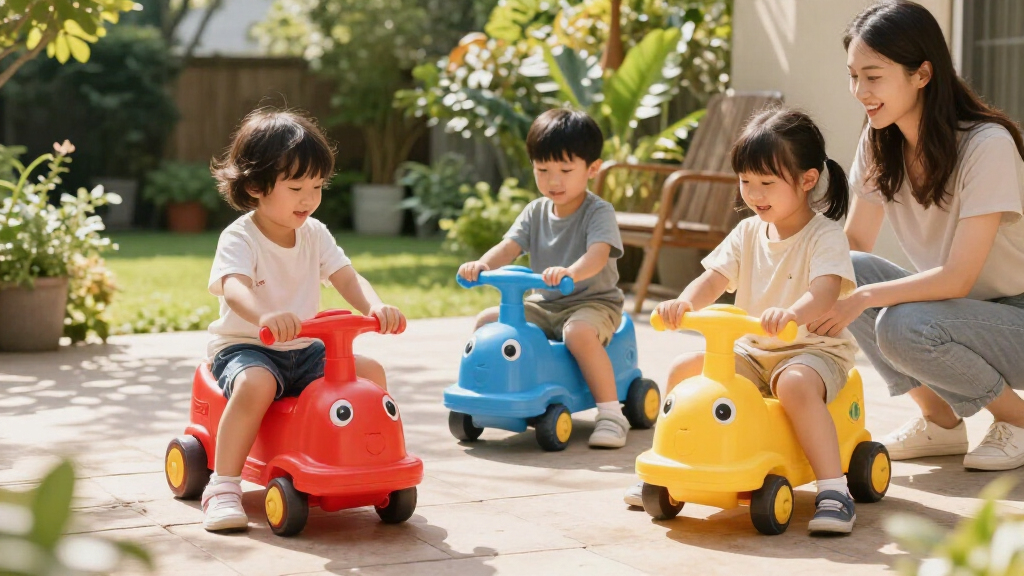

Kids educational ride-on toys sit at an interesting crossroads: they promise to build gross motor skills, spark pretend play, and teach cause-and-effect through buttons, sounds, and steering, all while your toddler burns off energy. The hard part is that most of these toys lean heavily in one direction — some are basically musical activity centers on wheels with weak educational substance, while others offer real developmental progression but skimp on durability or grow-out-too-fast designs. My top pick, the VTech Get Growing Tractor and Mower Ride-On, earns Best Overall because it layers genuine learning content onto a stable push-and-ride platform that lasts from early walking well into the preschool years. Budget-conscious buyers should look at the Lil’ Rider Scoot and Ride on Push Car for simple, sturdy value, and the Best Choice Products 3-in-1 Push and Pedal Car stands out for the longest usable lifespan in the lineup. Keep reading for the full breakdown of what each model does well, where each one falls short, and which one fits your child’s age and stage.

Turn the school run and nap time into listening time
- Thousands of audiobooks, podcasts and originals
- Listen on your phone, tablet or Echo — also offline
- Cancel anytime
Complete the kit


Key Takeaways
- The VTech Get Growing Tractor and Mower won Best Overall because it was the only model that combined structured educational content (numbers, colors, cause-and-effect) with two distinct ride modes, giving it the widest developmental runway in the lineup.
- Nearly every sub-$50 option in this roundup, including the Lil’ Rider and Little Tikes Push and Ride Racer, trades educational depth for durability — fine for pure motor development, weak if you want actual learning features.
- The licensed character ride-ons (Minnie Mouse, Mickey & Friends, CAT, John Deere) cost a premium largely for branding; the CAT Excavator is the one exception where the license adds real pretend-play and mechanical learning value through its rotating bucket.
- Only the Best Choice Products 3-in-1 Car offers true stage progression (push, pedal, independent ride), which is why it earns Best Longevity despite being one of the priciest picks.
- Fisher-Price‘s Cruise Along Scooter and the VTech tractor had the strongest research-backed learning design; the Kiddieland models had the most lights and sounds but the least educational structure per dollar.
| Best Ride On Cars CAT Excavator Push Car |  | Best for Imaginative Construction Play | Brand: Best Ride On Cars | Model Number: CATEX_Push_F2F | Licensed Theme: Caterpillar CAT Excavator | VIEW LATEST PRICE | See Our Full Breakdown |
| Fisher-Price Laugh & Learn Cruise Along Scooter Toy |  | Best Early Learning Ride-On | Brand: Fisher-Price | Recommended Age: 12 months to 3 years | Maximum Weight: 55 lb / 25 kg | VIEW LATEST PRICE | See Our Full Breakdown |
| VTech Get Growing Tractor and Mower Ride-On |  | Best Versatile 3-in-1 Design | Brand: VTech | Age Range: 12–36 months | Maximum Weight: 42 pounds | VIEW LATEST PRICE | See Our Full Breakdown |
| John Deere Sit ‘N Scoot Activity Tractor |  | Best Simple Foot-to-Floor Pick | Brand: TOMY (John Deere) | Age Range: 18 months and up | Maximum Weight: 60 pounds | VIEW LATEST PRICE | See Our Full Breakdown |
| Lil’ Rider Scoot and Ride on Push Car, Yellow |  | Best Budget Buy | Brand: Lil’ Rider | Age Range: 18 months to 3 years | Dimensions: 20″ x 9.5″ x 16.5″ | VIEW LATEST PRICE | See Our Full Breakdown |
| Little Tikes Push and Ride Racer |  | Best Value Grow-With-Me Pick | Dimensions: 22″L x 10″W x 17″H | Weight Limit: 50 lbs | Material: Plastic | VIEW LATEST PRICE | See Our Full Breakdown |
| Kiddieland Disney Minnie Mouse My First Activity Ride-On, Toddler Push Car |  | Best for Early Learning Features | Brand: Kiddieland | Character: Disney Minnie Mouse | Age Range: 1-3 years | VIEW LATEST PRICE | See Our Full Breakdown |
| Best Choice Products Kids 3-in-1 Push and Pedal Car with Handle, Horn, Music – Red |  | Best Multi-Stage Design | Dimensions: 33″L x 17″W x 33″H | Weight Capacity: 50 lbs | Modes: Stroller, walker, push-car | VIEW LATEST PRICE | See Our Full Breakdown |
| Kiddieland Mickey & Friends Activity Ride-On Car with Lights & Sounds |  | Best Character-Themed Pick | Brand: Kiddieland | Character: Mickey Mouse & Friends | Age Range: 12-36 months | VIEW LATEST PRICE | See Our Full Breakdown |
| kids educational ride-on toy | Brand | Age Range |
|---|---|---|
| Best Ride On Cars CAT Excavato | Best Ride On Cars | — |
| Fisher-Price Laugh & Learn Cru | Fisher-Price | — |
| VTech Get Growing Tractor and | VTech | 12–36 months |
| John Deere Sit ‘N Scoot Activi | TOMY (John Deere) | 18 months and up |
| Lil’ Rider Scoot and Ride on P | Lil’ Rider | 18 months to 3 years |
| Little Tikes Push and Ride Rac | — | — |
| Kiddieland Disney Minnie Mouse | Kiddieland | 1-3 years |
| Best Choice Products Kids 3-in | — | — |
| Kiddieland Mickey & Friends Ac | Kiddieland | 12-36 months |
More Details on Our Top Picks
Best Ride On Cars CAT Excavator Push Car
Of everything in this roundup, this licensed CAT Excavator Push Car leans hardest into role-play value. The working rotating bucket and authentic Caterpillar branding give kids something the John Deere Sit ‘N Scoot doesn’t: a moving part they can actually load and dump, which turns scooting into a construction site scenario rather than plain riding. The steering wheel with realistic sounds adds feedback that keeps the pretend play going, and the under-seat storage is handy for hauling small toys — something the Lil’ Rider also offers, though with a less distinctive theme. Compared with the VTech tractor, the educational payoff here is more imaginative than academic, and there’s no staged curriculum of phrases or songs. The tradeoff for that realism is durability: the bucket mechanism won’t survive being treated like playground equipment.
Pros:- Licensed Caterpillar design with an actual rotating, working bucket
- Steering wheel with realistic sounds deepens pretend play
- Under-seat storage holds small toys and treasures
- Sturdy backrest keeps early riders comfortably seated
Cons:- Bucket and moving parts can break under rough handling
- Priced higher than simpler foot-to-floor options like the Lil’ Rider
- Short usable lifespan once kids outgrow push cars
Best for: Parents of toddlers (roughly 1.5–3 years) who want a ride-on that doubles as a construction role-play prop
Not ideal for: Families with rough-and-tumble kids or limited budgets for licensed gear — the moving bucket and branding add cost and fragility
- Brand:Best Ride On Cars
- Model Number:CATEX_Push_F2F
- Licensed Theme:Caterpillar CAT Excavator
- Interactive Features:Rotating bucket, steering wheel sounds
- Storage:Under-seat compartment
- UPC:850045100599
Our verdict“Worth it for construction-obsessed toddlers whose parents value imaginative play over lights and curriculum.”
Fisher-Price Laugh & Learn Cruise Along Scooter Toy
Where the CAT Excavator teaches through imagination, the Fisher-Price Laugh & Learn Scooter takes a direct academic route. Its three Smart Stages levels adjust songs and phrases as your child grows, so the content a 12-month-old hears is different from what a nearly-3-year-old gets — a genuine learning curve that no other ride-on in this lineup matches, including the VTech tractor’s fixed phrase set. With over 50 songs and phrases, it’s also the most content-rich option here, which matters because toddlers burn through repetition fast. The wide-wheel base makes balancing manageable for brand-new walkers. The catch: it’s a 55-pound cap with an effective ceiling around age 3, and all that audio means you’ll be replacing batteries regularly — the VTech at least includes demo AAs in the box.
Pros:- Three Smart Stages levels grow with your child’s development
- 50+ songs and learning phrases provide long-lasting variety
- Wide-wheel design gives wobbly new walkers stable balance
- Highest weight capacity (55 lb) among the toddler electronics picks
Cons:- Heavier battery consumption than non-musical ride-ons like the John Deere
- Outgrown quickly after age 3 despite the weight capacity
- Learning content is screen-free but very audio-heavy for some households
Best for: Parents of 1-to-3-year-olds who want a ride-on that actively teaches letters, numbers, and songs rather than just rolling
Not ideal for: Anyone hoping for a toy that lasts past age 3, or noise-sensitive households that can’t tolerate constant music
- Brand:Fisher-Price
- Recommended Age:12 months to 3 years
- Maximum Weight:55 lb / 25 kg
- Songs and Phrases:50+
- Learning Levels:3 Smart Stages
- Design:Musical ride-on scooter with interactive buttons
Our verdict“The strongest pick here if structured early learning is your top priority for a 12-to-36-month-old.”
VTech Get Growing Tractor and Mower Ride-On
The VTech Get Growing Tractor and Mower is the only toy in this batch that solves the short-lifespan problem head-on: its 3-in-1 design converts from ride-on tractor to push lawn mower to take-along activity toy, so it stays relevant even when your toddler isn’t in the mood to ride. That flexibility is something the Fisher-Price scooter can’t offer — once your child refuses to sit on it, the toy is done. The realistic mower and tractor sounds encourage kids to ‘do chores’ alongside adults, a subtle form of imitation learning that works well between 12 and 36 months. Tradeoffs are real: the 42-pound weight limit is the lowest here, the transforming parts won’t tolerate being yanked or dropped, and full functionality depends on fresh AA batteries rather than the demo cells included.
Pros:- Converts between ride-on, push mower, and take-along play modes
- Realistic sounds and phrases fuel imitation-based pretend play
- Demo batteries included so it works out of the box
- Good fit for the youngest starters at 12 months
Cons:- 42-pound weight cap is the lowest in this roundup
- Conversion parts are the fragile point under rough handling
- Needs new AA batteries for anything beyond demo use
Best for: Families who want one purchase to cover riding, pushing, and tabletop play through the toddler years
Not ideal for: Kids over 42 pounds or heavier toddlers, and rough players who stress moving conversion parts
- Brand:VTech
- Age Range:12–36 months
- Maximum Weight:42 pounds
- Play Modes:3-in-1: tractor, mower, take-along
- Batteries:2 AA (demo included, new recommended)
- Interactive Features:Realistic sounds, phrases, buttons
Our verdict“Smartest buy for 1-to-2-year-olds whose parents want play modes that outlast the riding phase itself.”
John Deere Sit ‘N Scoot Activity Tractor
After three battery-powered options, the John Deere Sit ‘N Scoot earns its spot by doing less, better. There are no songs, no buttons, and no electronics to break — just a stable wide wheelbase and a lightweight frame toddlers can scoot themselves, which is precisely what builds leg strength and balance. That simplicity is its educational angle: kids power it entirely themselves, unlike the CAT Excavator’s parent-assisted push format or the Fisher-Price scooter’s entertainment-first approach. The 60-pound weight capacity is the highest in this batch, giving it the longest usable window, and it moves easily between carpet, patio, and driveway. The obvious tradeoff is that it does nothing else — no sounds, no storage, no accessories — so children raised on interactive toys may find it plain.
Pros:- No batteries or electronics to maintain, replace, or listen to
- Highest weight capacity here at 60 pounds for a longer usable life
- Wide wheelbase and light weight make self-scooting easy and stable
- Authentic John Deere styling and easy assembly
Cons:- Zero interactive features compared with every other pick in this lineup
- Hard plastic seat offers less comfort and back support than the CAT model
- Supervision still needed, especially near slopes and driveways
Best for: Parents who want a low-maintenance, battery-free ride-on that promotes physical activity and survives sibling hand-me-downs
Not ideal for: Kids who expect lights, music, and buttons — this deliberately has none
- Brand:TOMY (John Deere)
- Age Range:18 months and up
- Maximum Weight:60 pounds
- Design:Foot-to-floor with wide wheelbase
- Material:Durable plastic
- Power:None — kid-powered
- Assembly:Easy to assemble
Our verdict“The no-frills choice for families who value durability and active play over gadgets.”
Lil’ Rider Scoot and Ride on Push Car, Yellow
At the value end of this roundup, the Lil’ Rider Push Car covers the basics — lights, sounds, music, under-seat storage, and a steering wheel — at a price that undercuts the licensed CAT and John Deere models considerably. You still get the cause-and-effect learning that buttons and sounds provide, plus storage the VTech tractor lacks entirely. Its sturdy plastic frame holds up to normal toddler abuse, and the compact 20-inch footprint stores easily in a closet or trunk. But the savings show: batteries aren’t included, the sound quality is basic compared with Fisher-Price’s 50+ song library, and it’s strictly a flat-surface toy — grass, gravel, or carpet will stop it cold, where the John Deere’s simple wheels roll more forgivingly.
Pros:- Lights, sounds, and music at a lower price than licensed alternatives
- Under-seat storage for small toys
- Compact 20-inch footprint stores easily in small homes
- Durable plastic frame built for regular toddler use
Cons:- Performs poorly off flat surfaces — no grass, gravel, or thick carpet
- Batteries not included, so add that cost to the price
- Audio and build quality trail the Fisher-Price and CAT options
Best for: Budget-conscious buyers and grandparents who want a fun, feature-filled push car without a licensed-brand price tag
Not ideal for: Yards with grass or uneven terrain, and buyers expecting premium sound or licensed detailing
- Brand:Lil’ Rider
- Age Range:18 months to 3 years
- Dimensions:20″ x 9.5″ x 16.5″
- Material:Plastic
- Color:Yellow with colorful decals
- Batteries:2 AA required (not included)
- Features:Lights, sounds, music, under-seat storage
Our verdict“The right call if you want the full lights-and-sounds experience for the least money, provided you have smooth floors or pavement.”
Little Tikes Push and Ride Racer
Most ride-ons in this category charge a premium for batteries, sounds, and licensed characters. The Little Tikes Push and Ride Racer skips all of that, and that restraint is exactly why it earns the value slot. It works as both a walker for early steppers and a ride-on once balance improves, which means one purchase covers roughly two developmental stages.
Compared with the Best Choice Products 3-in-1 Push and Pedal Car, it offers less structure — no side rails, no horn, no music — but its compact 22-inch frame is far easier to store and maneuvers better indoors. The tradeoff is simplicity: there’s nothing to entertain a child who wants buttons and lights, and the bare back seat won’t hold toys. Assembly is required but minimal. For parents who prioritize durability over gimmicks, this USA-made plastic build tends to outlast flashier competitors.
Pros:- Dual functionality as both a push walker and ride-on extends usable lifespan
- Durable USA-made plastic construction with sturdy handles and high back
- Works indoors and outdoors for flexible play
- No batteries required, so no ongoing replacement costs
Cons:- No interactive features like music or lights to engage older toddlers
- 50 lb weight limit means it will be outgrown relatively quickly
Best for: Budget-conscious parents of toddlers 12-36 months who want one toy to cover the walking-to-riding transition without battery costs
Not ideal for: Toddlers who crave interactive stimulation — no sounds, lights, or character features to hold their attention
- Dimensions:22″L x 10″W x 17″H
- Weight Limit:50 lbs
- Material:Plastic
- Made In:USA
- Functionality:Ride-on and walker in one
- Batteries Required:None
Our verdict“This is the pick for families who want a dependable, battery-free two-stage toy at a low price rather than an entertainment center on wheels.”
Kiddieland Disney Minnie Mouse My First Activity Ride-On, Toddler Push Car
Where the Little Tikes Push and Ride Racer is purely physical, the Minnie Mouse My First Activity Ride-On leans into cognition. The standout difference is its educational clock and peekaboo window, which give toddlers something to manipulate and learn from while they scoot — a genuine leg up on ride-ons that only make noise.
Against its sibling, the Kiddieland Mickey & Friends Activity Ride-On, the Minnie version wins on structured learning elements, though both share the same battery-dependent electronics. The realistic steering wheel and gear shift do more than decorate; they teach cause and effect through pretend driving. The catch: battery life hovers around two hours of active use, so frequent replacements are realistic, and the design is really an indoor toy. Parents wanting outdoor durability should look at the Caterpillar Excavator instead.
Pros:- Educational clock and peekaboo window support early learning, not just movement
- Lights, sounds, and realistic car features fuel rich pretend play
- Sturdy, stable base keeps new walkers secure
- Batteries are included so it works out of the box
Cons:- Battery life of roughly two hours means frequent replacements
- Indoor-only design limits long-term play value
Best for: Parents of 1-3 year olds who want a ride-on that doubles as an early-learning toy with shapes, time concepts, and interactive play
Not ideal for: Households avoiding battery-powered toys or anyone needing an outdoor ride-on — the electronics and size are indoor-only
- Brand:Kiddieland
- Character:Disney Minnie Mouse
- Age Range:1-3 years
- Batteries:2 AA (included)
- Features:Lights, sounds, educational clock, peekaboo window
- Use:Indoor
Our verdict“Choose this when you want learning built into the ride itself — just budget for AA batteries.”
Best Choice Products Kids 3-in-1 Push and Pedal Car with Handle, Horn, Music – Red
Few ride-ons genuinely grow with a child, but the Best Choice Products 3-in-1 Push and Pedal Car makes the strongest case here by converting from stroller to walker to push-car. Compared with the Little Tikes Push and Ride Racer‘s two modes, this adds a parent-push handle and pedal option, meaning adults can steer outings before the child ever walks independently.
The side rails and supportive backrest provide containment the Little Tikes lacks, which matters for wobbly one-year-olds. The tradeoff is bulk: at 33 inches long and tall, it dominates small living rooms, and it sacrifices the simple cleanability of lighter models. The horn and music add engagement, though they don’t match the structured learning tools on the Minnie Mouse Activity Ride-On. Assembly instructions are sparse, so expect some figuring-out at setup.
Pros:- Three configurations (stroller, walker, push-car) cover multiple developmental stages
- Side rails and backrest provide security the competition lacks
- Built-in storage compartment holds snacks or toys on the go
- Horn and music features add engagement without constant battery drain concerns
Cons:- Large 33-inch footprint is awkward in small homes
- Sparse assembly documentation makes setup frustrating
- Only available in red, limiting style choice
Best for: Parents who want a single purchase carrying a child from pre-walking stroller rides through independent pedaling, with adult steering control
Not ideal for: Apartment dwellers with limited storage — the large footprint demands real floor space
- Dimensions:33″L x 17″W x 33″H
- Weight Capacity:50 lbs
- Modes:Stroller, walker, push-car
- Safety Features:Side rails, backrest
- Extras:Horn, music, storage compartment
- Color:Red
Our verdict“This model makes sense for families who value long-term versatility and safety structure over compact storage.”
Kiddieland Mickey & Friends Activity Ride-On Car with Lights & Sounds
If your toddler has a Disney allegiance, the Mickey & Friends Activity Ride-On converts that enthusiasm into motivation to move. Against the Minnie Mouse version, it trades the educational clock for a stronger emphasis on realistic driving sounds and music, making it the better choice for kids who respond to cause-and-effect play rather than structured lessons.
Its lightweight frame is a real advantage over the bulkier Best Choice Products 3-in-1 — toddlers can maneuver it themselves, and parents can carry it room to room without strain. Cleanup is simple, which matters for a toy that lives on the floor. The compromises are familiar: batteries aren’t included (unlike the Minnie model), it stays indoors, and an adult should handle assembly. The 12-36 month window is narrower than some rivals, so the usable lifespan is shorter.
Pros:- Beloved Mickey Mouse theming boosts toddler engagement and imaginative play
- Lightweight, stable design is easy for toddlers to steer independently
- Music, lights, and driving sounds develop motor skills and cause-effect learning
- Simple assembly and wipe-clean surfaces suit daily indoor use
Cons:- Batteries not included, adding immediate extra cost
- Indoor-only design with a narrow 12-36 month age range limits longevity
Best for: Mickey Mouse-loving toddlers 12-36 months whose parents want a light, easy-to-clean indoor ride-on that rewards self-propelled exploration
Not ideal for: Families wanting outdoor use or longer-term value — the age window and indoor-only design shorten its lifespan
- Brand:Kiddieland
- Character:Mickey Mouse & Friends
- Age Range:12-36 months
- Item Type:Ride-On Car
- Batteries Required:2 AA (not included)
- Features:Music, lights, realistic driving sounds
- Use:Indoor
Our verdict“A strong choice for Disney-obsessed toddlers, provided you accept a shorter usable window and indoor-only play.”
How We Picked
I evaluated these nine ride-ons against four criteria that matter most for educational ride-on buyers: learning value, developmental runway, build quality, and safety. Learning value looked at whether the interactive features actually taught something — numbers, colors, cause-and-effect, or mechanical cause-and-effect like the CAT Excavator’s working bucket — versus buttons that just make noise. Developmental runway measured how many months or years a child could realistically use the toy before outgrowing it, which heavily favored convertible and multi-mode models like the Best Choice Products 3-in-1 and the VTech tractor. Build quality and safety covered weight limits, tip resistance, wheel material, and how well each model held up to outdoor use.
Ranking also reflected value relative to price, not just absolute quality. A $120 licensed character ride-on with shallow learning features ranked below a $45 push car that does its simple job extremely well. Models were also compared head-to-head within age bands: the Fisher-Price scooter and Kiddieland cars compete for the same 12-to-36-month window, so differences in educational structure, not features counts, decided their order. That comparison logic is why the VTech tractor sits at the top and why the character-branded options cluster lower despite their popularity.
| kids educational ride-on toy | Brand |
|---|---|
| Best Ride On Cars CAT Excavato | Best Ride On Cars |
| Fisher-Price Laugh & Learn Cru | Fisher-Price |
| VTech Get Growing Tractor and | VTech |
| John Deere Sit ‘N Scoot Activi | TOMY (John Deere) |
| Lil’ Rider Scoot and Ride on P | Lil’ Rider |
| Little Tikes Push and Ride Rac | — |
| Kiddieland Disney Minnie Mouse | Kiddieland |
| Best Choice Products Kids 3-in | — |
| Kiddieland Mickey & Friends Ac | Kiddieland |
Factors to Consider When Choosing Kids Educational Ride-on Toys
Before picking a specific model, it helps to understand what actually separates a genuinely educational ride-on from a noisy toy with wheels. These are the factors that shaped my rankings — and the tradeoffs most parents get wrong.Match the Toy to Your Child’s Developmental Stage, Not Their Age
Age ranges on ride-on boxes are generous to the point of misleading. A toy rated 12–36 months might frustrate a new walker who can’t yet steer, then bore a coordinated three-year-old within weeks. The better approach is to buy for the stage your child is entering, not the one they’re in — a just-walking toddler gets more from a push-behind model with a sturdy handle, while a confident walker needs a sit-and-scoot platform. Convertible models like the Best Choice Products 3-in-1 command a higher price precisely because they bridge stages. The common mistake here is buying a single-stage toy at full price that gets four months of use. If you have multiple children or plan to, that convertible premium pays for itself; for a youngest or only child approaching preschool, it usually doesn’t.
Distinguish Real Learning Features From Decorative Noise
Every manufacturer claims their ride-on is educational, but there’s a wide gap between a toy that teaches and one that entertains. Genuine educational design looks like the VTech tractor’s structured prompts — asking the child to identify colors or count — because those create feedback loops the child can learn from. Decorative noise is a button that plays the same song regardless of what the child does, which entertains but teaches nothing about cause-and-effect. A useful test when shopping: does the toy respond differently to different actions? If pressing, steering, and pushing all produce the same result, the learning claims are marketing. Also watch for volume — toys without a low setting get retired by parents fast, no matter how good the curriculum. The pattern in this roundup was clear: Fisher-Price and VTech engineer learning content deliberately, while most licensed character toys treat sound as decoration.
Indoor Wheels Versus Outdoor Reality
Wheel material determines where a ride-on can actually live, and this is the spec parents most often overlook. Smooth plastic wheels protect hardwood floors and work fine on carpet and sidewalks, but they crack on rough asphalt and slide on wet pavement. Rubberized or wide-tread wheels handle driveways and grass better but mark some indoor flooring. The CAT Excavator and John Deere tractor in this lineup are built with outdoor pretend play in mind, so their wheels and bodies tolerate grit and sun better than the Kiddieland models, which are closer to indoor activity toys with wheels attached. Be honest about where your child will ride: if it’s mostly the living room and hallway, don’t pay for outdoor-grade durability you’ll never stress. If the driveway is the plan, a lighter indoor toy will disappoint within a season.
Weight Limits, Tip Stability, and the Safety Features That Matter
Published weight limits are a floor, not a ceiling — a child near the limit on a toy with a high center of gravity will tip it on turns long before the structure fails. Lower-slung sit-and-scoot designs like the Little Tikes Push and Ride Racer are inherently more stable than taller activity ride-ons with handlebars and dashboards full of electronics. Anti-tip features worth having include a wide wheelbase relative to seat height and a low step-over for mounting. Push-handle models deserve extra scrutiny: check that the handle attaches at a height comfortable for an adult walking hunched beside it, because a short handle means back pain and a short push phase — parents end up carrying both the child and the toy home. Also verify battery compartments on electronic models screw shut; that’s a basic safety standard some budget imports skip.
Assembly Time and Battery Costs Are Hidden Prices
The sticker price understates what most electronic ride-ons actually cost. Models with lights and sounds typically need two to four AA or AAA batteries that get replaced monthly with regular use, and several picks in this roundup arrive as 30-to-60-minute assembly jobs with mediocre instructions — factor that into a gift-giving morning. Mechanical models like the Lil’ Rider and Little Tikes Racer avoid both issues, which is part of why they dominate the value tier. If you’re choosing an electronic model, rechargeable batteries and a small screwdriver set pay for themselves within a few months. One more hidden cost: storage footprint. Activity ride-ons with fixed handlebars don’t fold, so measure your closet or garage corner before buying the biggest option.
Licensed Characters: When the Premium Is Worth It
Character licensing reliably adds $15–$40 to a ride-on’s price, and whether that’s worth it depends on what the license does. In most cases — the Minnie Mouse and Mickey models here — the character is purely cosmetic, and you’re paying brand tax on otherwise ordinary activity toys. The exception is when the license enables pretend play the toy couldn’t otherwise support. The CAT Excavator’s licensed design includes a functional rotating excavator arm, which turns the toy into a mechanical-learning experience about how digging equipment works. The John Deere Sit ‘N Scoot plays the same role for farm pretend play at a lower price. The practical rule: if removing the character decals would make the toy boring, skip it; if the toy would still be interesting, the license might be adding real play value rather than just cost.
Frequently Asked Questions
Are ride-on toys with lights and sounds actually educational, or just distracting?
It depends entirely on how the electronics are designed, and the difference showed up clearly across this lineup. Well-designed models like the VTech Get Growing Tractor and Fisher-Price Cruise Along Scooter use sounds responsively — prompting the child to identify colors, count, or react to their actions — which builds cause-and-effect understanding and early vocabulary. Toys where every button plays an unrelated song entertain but teach little, because there’s no connection between the child’s action and a learning outcome. A good middle path is choosing one toy with strong interactive learning content and pairing it with a mechanical model like the CAT Excavator, where the education comes from physical operation rather than electronics. If noise is a concern in your home, prioritize models with volume switches or skip electronics altogether.
What’s the right age to move from a push walker ride-on to an independent sit-and-scoot?
Most toddlers make this move between 15 and 20 months, once they walk confidently and can mount a seat without support. Push-behind ride-ons like the Little Tikes Push and Ride Racer serve double duty before that point: the child pushes while walking, then later sits and rides the same toy. The signs a child is ready for independent scooting include steady standing balance, the ability to get on and off a low seat unassisted, and intentional steering rather than just plowing forward. Buying a sit-and-scoot too early isn’t dangerous so much as wasted — the child will use it as a pull-to-stand toy and ignore the ride function. This is the main argument for convertible models like the Best Choice Products 3-in-1, which absorb that transition instead of requiring a second purchase.
Do the licensed character ride-ons hold resale or interest better over time?
Character appeal fades with the child, and that cuts both ways. A two-year-old obsessed with Minnie Mouse may use that ride-on daily for a year, then drop it abruptly when the phase passes — which is fine if you bought at a moderate price, painful at a premium. Resale on licensed toys is actually weaker than on neutral, mechanically interesting models, because the next buyer’s child may be into something else entirely. Durable work-vehicle themes like CAT and John Deere age better than entertainment characters, since construction and farm pretend play stays relevant from age one through five. My practical advice: character toys are best bought at the budget tier or secondhand, while full-price spending is better directed at convertible or mechanically rich models with longer engagement windows.
Can these ride-ons be used outdoors, or are they indoor-only?
Roughly half the models in this roundup are indoor-first, and using them outside shortens their life considerably. The Kiddieland activity cars and Fisher-Price scooter have electronics and smooth wheels that degrade on sun, grit, and moisture — light porch or sidewalk use is fine, but gravel and grass will wear them down. The CAT Excavator, John Deere tractor, and Little Tikes Racer are built from thicker UV-tolerant plastic with wider wheelbases, so they handle driveways and lawns well. Rain storage matters too: even outdoor-rated models shouldn’t live outside permanently, as UV embrittles plastic within a couple of seasons. If your child will mostly ride outdoors, prioritize mechanical models without electronics and check that the wheels are wide enough not to sink into grass.
Is it worth paying more for a 3-in-1 convertible ride-on instead of buying a cheap push car first?
The math favors convertibles only in specific situations. A 3-in-1 like the Best Choice Products pedal car costs roughly the same as buying two separate budget toys, so it wins financially if your child will actually use all three stages — roughly ages one through four. It loses if you have an only child who’s already a confident walker, because you’d be paying for a push stage you’ll skip entirely. Convertibles also involve compromise: they’re typically heavier and bulkier than single-purpose toys at each stage, and the pedal mechanism adds weight a small toddler pushes around even when not pedaling. Families with multiple kids, or gift-buyers who don’t know the child’s exact stage, get the most value from the convertible approach. For a known stage and a tight budget, a simple dedicated push car or scooter does the job just as well for less.
Conclusion
The right pick here depends less on which toy is objectively best and more on your child’s stage and your tolerance for noise, batteries, and cost. For Best Overall, the VTech Get Growing Tractor and Mower is the strongest all-around choice — genuine learning content, two ride modes, and the longest useful window among the electronic models. For Best Value, the Lil’ Rider Scoot and Ride on Push Car delivers sturdy, no-frills motor development at the lowest realistic price, with the Little Tikes Push and Ride Racer as a close alternative if you want a trusted brand name. For Best for Beginners, the Fisher-Price Laugh & Learn Cruise Along Scooter is the gentlest entry point for the 12-month crowd, with the most thoughtfully designed learning content for that age band. For Best Premium, the Best Choice Products 3-in-1 Push and Pedal Car justifies its price through stage progression that no other model matches. For specific needs: outdoor-focused families should choose the CAT Excavator for its mechanical learning and durable build, farm-pretend-play fans get the John Deere Sit ‘N Scoot at a gentler price, and the Kiddieland Minnie and Mickey ride-ons make sense only for a child currently in that character phase at the lowest price you can find. Whatever you choose, buy for the stage ahead, check the volume switch before gift day, and you’ll get your money’s worth from this category.
Fall Picks
fall essentials
As an affiliate, we earn on qualifying purchases.