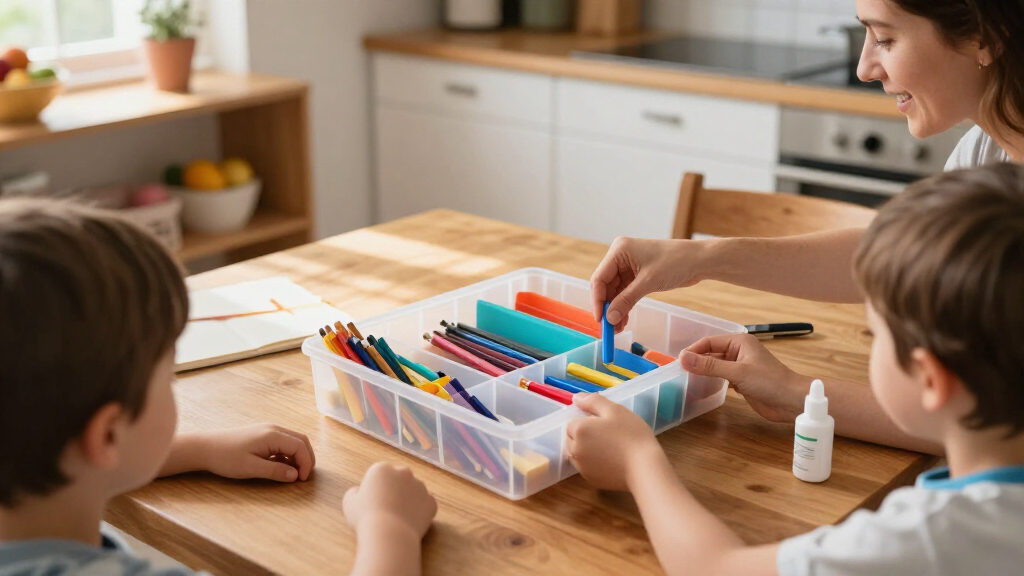

A good kids’ school supplies organizer has to survive being tossed in a backpack, opened twenty times a day, and dragged between a bedroom desk and the kitchen table — all while keeping pencils, markers, and glue sticks from vanishing into the couch cushions. After comparing six popular options, the Hapinest Rotating Art Supply Organizer stands out as the best overall pick for a homework station, thanks to its spin-and-grab access that keeps supplies visible instead of buried. If portability matters more, the Double Layer Large Capacity Pink Pencil Case is the strongest backpack-friendly option, while the TERGOO 3-Layer Organizer Box wins for families with small, loose items like beads or erasers that need divided compartments. The main tradeoff in this category is between open desktop access and closed portable storage — the best choice depends on where your child actually does homework. Keep reading for the full breakdown, including who each organizer suits and who should skip it.
Listen free for 30 days with Audible
Thousands of audiobooks and originals — cancel anytime.
Start your free trialAs an affiliate, we earn on qualifying purchases.
Complete the kit


Key Takeaways
- Desktop spin organizers like the Hapinest beat traditional pencil cases for homework stations because kids can see every supply at once, which reduces the ‘I can’t find a red crayon’ interruptions.
- Two of the six products were near-identical caddies — the Tiawudi caddies differ mainly in color and listing, so price per unit should decide between them, not features.
- Closed cases (the Double Layer Pink Pencil Case and the TERGOO box) protect supplies in transit but hide contents, which matters if your child needs visual reminders to put supplies away.
- Adjustable dividers on the TERGOO made it the most flexible option, but its latch-based design is better for craft storage than for supplies a child grabs multiple times per homework session.
- The Learning Resources Create-a-Space sits in the middle: open like a spin organizer but non-rotating, making it a better fit for shared classroom tables than solo desks.


| kids’ school supplies organizer | Material | Compartments | Color | Dimensions |
|---|---|---|---|---|
| Double Layer Large Capacity Pi | PP plastic | Two independent tiers | Pink (multiple colors available) | — |
| Learning Resources Create-a-Sp | Plastic | — | Pastel | — |
| Tiawudi Multipurpose Caddy Org | Durable, BPA-free plastic | Up to five with removable divider | — | 9-7/8" x 6-1/8" x 4-3/8" |
| Hapinest Rotating Art Supply O | Durable plastic | — | — | — |
| Tiawudi Multipurpose Caddy Org | Durable, BPA-free plastic | Up to 5 with removable divider | — | 9-7/8" x 6-1/8" x 4-3/8" |
| TERGOO 12-inch 3-Layer Plastic | Premium thickened PP plastic | Multiple with adjustable dividers | Pink | 12 x 7 x 6 inches |
More Details on Our Top Picks
Double Layer Large Capacity Pink Plastic Pencil Case with Snap-tight Lid
This option stands out for sealed, two-tier storage that actually travels well in a backpack — something none of the desktop organizers in this lineup can claim. The snap-tight lid means a dropped bag doesn’t scatter pencils across the hallway, and the semi-transparent plastic lets a child find the right tier without opening it. Compared with the Hapinest rotating organizer, which is built to sit on a desk, this case is the pick that moves between home and school. The tier depths differ on purpose: the shallower 0.7-inch level holds erasers and sharpeners, while the 1.5-inch level swallows markers and scissors. The tradeoff is weight capacity — unlike the Tiawudi caddy, it can’t hold glue bottles or bulk supplies, so it works best as a pencil case rather than a full desk system.
Pros:- Snap-tight lid keeps supplies contained in a backpack
- Two independent tiers separate small and large items
- Semi-transparent plastic makes contents easy to identify
- Lightweight and genuinely portable
Cons:- Ages 6 and up only, limiting younger siblings
- Compartment depths too shallow for glue bottles or bulky supplies
Best for: Elementary and middle school students who carry supplies between home and school daily
Not ideal for: Kids under 6, or families wanting a stationary desktop hub — the small tier depth and lid design limit bulkier items
- Material:PP plastic
- Design:Double layer, hard case
- Compartments:Two independent tiers
- First Compartment Depth:0.7 inches
- Second Compartment Depth:1.5 inches
- Closure:Snap-tight lid
- Base:Non-slip bottom
- Color:Pink (multiple colors available)
Our verdict“Buy this if you need one organizer that survives the commute to school — skip it for a stay-at-home desk setup.”
Learning Resources Create-a-Space Storage Center, Pastel
Where most organizers here demand some fine-motor patience, this one is built around preschool-friendly access: supplies sit upright in open compartments, so a five-year-old can grab a crayon mid-project without unlatching anything. That open design is the key difference from the double-layer pencil case, which rewards older kids who can manage a lid and layered tiers. The soft pastel tray also reads as classroom furniture rather than gear, which suits teachers setting up shared supply stations. The honest tradeoff is capacity and specificity — like the Hapinest spinner, it handles small supplies well, but glue bottles, scissors, and workbooks don’t fit, and the manufacturer doesn’t publish dimensions, so measure your shelf before ordering. Compared with the Tiawudi caddy, it trades customization for simplicity, which is exactly right for the youngest users.
Pros:- Open compartments let young kids grab supplies independently
- Lightweight enough to move between activity stations
- Kid-friendly pastel design fits classroom decor
- Holds supplies upright for quick visual selection
Cons:- No published dimensions, making fit planning difficult
- Cannot accommodate larger items like glue bottles or scissors
- Open design offers no protection from spills or dust
Best for: Preschool and early-elementary teachers and parents setting up an accessible art or supply station
Not ideal for: Older students or anyone storing bulky items — open compartments spill easily and capacity is limited to small supplies
- Material:Plastic
- Color:Pastel
- Design:Open desktop storage center
- Suitable For:Preschool, elementary classrooms, creative workspaces
- Portability:Lightweight, portable
- Capacity:Small art and school supplies
Our verdict“This makes the most sense for the under-7 crowd; anyone needing enclosed or high-capacity storage should look elsewhere.”
Tiawudi Multipurpose Caddy Organizer, Plastic with Handle, Stackable Desk and Storage Organizer
This caddy earns its spot on flexibility per dollar: five compartments, a removable divider, a carry handle, and a stackable footprint that lets you build a modular system by buying two. That stackability is its real advantage over the Learning Resources center, which is a single fixed tray — here, a growing supply collection scales without new furniture. The removable divider also means the layout can change as a child’s needs shift from crayons to compasses and calculators, something the fixed-cup Hapinest can’t do. The compromises are real, though: at under 10 inches wide, long pencils and rulers sit at awkward angles, and the divider system is less precise than the adjustable slots in the TERGOO craft box. Still, for a homework corner that needs to double as a craft station, this is the most adaptable budget choice in the lineup.
Pros:- Stackable design scales into a multi-caddy system
- Removable divider lets you customize compartment sizes
- Easy-grip handle for moving between rooms
- BPA-free plastic wipes clean easily
Cons:- Compact footprint awkward for long pencils and rulers
- Removable divider can shift or feel loose with daily use
- Limited color options
Best for: Budget-conscious families building a flexible homework and craft station on a desk or shelf
Not ideal for: Anyone organizing long items like rulers and full-size pencils — the footprint is too compact for them to lie flat
- Dimensions:9-7/8″ x 6-1/8″ x 4-3/8″
- Compartments:Up to five with removable divider
- Material:Durable, BPA-free plastic
- Handle:Portable easy-grip handle
- Stackable:Yes
- Uses:Stationery, cleaning supplies, cosmetics, crafts
Our verdict“The smart buy if you want modular, customizable storage without spending much — just not for oversized supplies.”
Hapinest Rotating Art Supply Organizer – Crayon, Marker & Pencil Storage for Kids and Classroom
The spinning base is what separates this from everything else here: a child seated at a shared table can rotate to reach any cup without leaning across siblings or classmates. That makes it the natural pick for craft tables and group settings, where the Tiawudi caddy would need to be physically picked up and passed. The six removable cups add a smart cleanup mechanic — a whole cup of markers can travel to the table and back, and an individual cup can be washed after a paint mishap. Compared with the Learning Resources center, it trades that product’s calm tray layout for playful, active access, which suits slightly older kids better than toddlers. The weaknesses: the spin mechanism can stiffen with heavy use, colors may fade, and like every desktop model here, it’s no match for the TERGOO box if you need to transport supplies.
Pros:- Rotating base gives seated kids access from any angle
- Six removable cups double as portable and washable subsets
- Durable enough for daily classroom handling
- Keeps markers and crayons sorted by type
Cons:- Spin mechanism may degrade with heavy use
- No lid, so it can’t travel in a backpack
- Cups limited to small-diameter art supplies
Best for: Families and teachers with shared art tables where multiple kids need simultaneous access to supplies
Not ideal for: Students who transport supplies to school — there’s no lid, so it’s strictly a stay-put desktop piece
- Number of Cups:6
- Removable Containers:Yes
- Base:Rotating with smooth spin
- Material:Durable plastic
- Suitable For:Crayons, markers, pencils
- Best Placement:Kids’ bedrooms, classrooms, craft areas
Our verdict“Choose this for a busy shared art space; skip it if supplies need to travel or be enclosed.”
Tiawudi Multipurpose Caddy Organizer with Handle, Stackable Plastic Desk and Storage Organizer
This is the sibling of the other Tiawudi caddy, and the honest comparison matters: the dimensions, five-compartment layout, and removable divider are essentially identical, so the choice comes down to availability, price, and color on the day you order. What earns it a separate slot is how well that shared formula fits a small homework desk — at under 10 inches wide, it leaves room for a laptop beside it, where the taller Hapinest spinner would crowd the workspace. The customization story is its strength against fixed organizers: pull the divider for a calculator and scissors bay, or keep it in for sorted pencils. The same limits apply as its twin — long items won’t fit flat, and the divider fit isn’t rock-solid. If the TERGOO craft box is overkill for your child’s needs, this is the lighter, cheaper starting point.
Pros:- Compact footprint fits crowded homework desks
- Removable divider adapts compartments to current needs
- Handle makes it easy to relocate for study sessions elsewhere
- BPA-free, easy-clean plastic stands up to kids
Cons:- Nearly identical to the other Tiawudi caddy — check price before choosing
- Too small for rulers, long pencils, or bulky items
- Limited color options
Best for: Students with limited desk space who need sorted supplies within arm’s reach of a laptop or notebook
Not ideal for: Buyers wanting deep storage or long-item capacity — the shallow, compact footprint rules both out
- Dimensions:9-7/8″ x 6-1/8″ x 4-3/8″
- Compartments:Up to 5 with removable divider
- Material:Durable, BPA-free plastic
- Handle:Portable
- Stackable:Yes
- Uses:Stationery, cleaning supplies, cosmetics, crafts
Our verdict“A solid compact desk organizer for tight spaces, provided it’s priced below its twin when you buy.”
TERGOO 12-inch 3-Layer Plastic Craft Organizer and Storage Box with Handle & Adjustable Dividers (Pink)
Most organizers in this roundup sit on a desk and stay there — the Hapinest Rotating Art Supply Organizer and the Learning Resources Create-a-Space are stationary by design. The TERGOO takes the opposite approach: it’s a three-layer tackle-box style carrier that closes up, latches shut, and travels between home, school, and Grandma’s house. The adjustable dividers are the real differentiator here — unlike the fixed compartments in the Double Layer Pencil Case, you can reconfigure each layer to fit chunky erasers, washi tape, or a dozen glue sticks without wasted space. The transparent lid means no more dumping everything out to find the scissors. Compared with the Tiawudi caddies, which favor open access over protection, this box keeps small supplies from spilling in a backpack. The tradeoff: it’s fiddly to open mid-project, and the plastic latch design may loosen after a school year of daily use.
Pros:- Adjustable dividers let compartments fit everything from pencils to chunky tape rolls
- Portable handle and folding design make it genuinely travel-ready
- Transparent cover shows contents without opening the box
- Three layers hold far more than a standard pencil case
Cons:- Latches and hinges may wear down with heavy daily use
- Compartment height limits storage of taller items like rulers or full-size scissors
- Available only in pink, which won’t suit every kid
Best for: Kids who transport supplies between home and school, or families who need craft materials packed away safely between projects
Not ideal for: Kids who need grab-and-go access during homework or art time — the lid and latches slow down frequent use compared with open caddies
- Dimensions:12 x 7 x 6 inches
- Layers:3 stackable tiers
- Material:Premium thickened PP plastic
- Color:Pink
- Handle:Yes, built-in carry handle
- Compartments:Multiple with adjustable dividers
- Portability:Folds closed for travel and storage
- Use Cases:School supplies, crafts, sewing, medicine, small tools
Our verdict“This is the pick for families whose supplies need to move — if everything lives on one desk, an open organizer like the Hapinest will be more convenient day to day.”
How We Picked
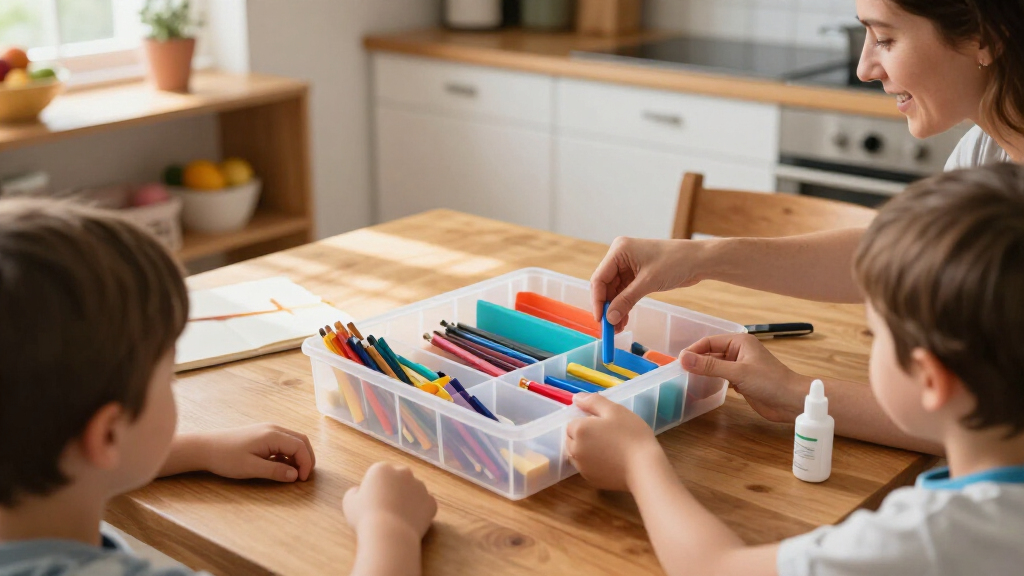
I evaluated each organizer against the realities of how kids actually store and use school supplies: how quickly a child can find and grab a specific pencil mid-homework, whether the organizer survives being knocked off a desk or crammed in a backpack, and how many supplies it realistically holds beyond the marketing photos. I also weighed visibility versus portability as the central tradeoff — open desktop organizers encourage kids to put supplies back, while latched cases protect contents in transit but hide them from view. Ease of cleaning mattered too, because glue leaks and broken crayons are inevitable.
The ranking logic favors organizers that match the most common use case: a dedicated homework spot at home. That pushes the rotating Hapinest to the top for daily accessibility, positions the caddies and Create-a-Space as strong station-style alternatives, and places the closed cases as picks for specific needs — travel, small loose parts, or shared spaces — rather than all-around winners. Duplicated products were ranked by value, not by listing order.
| kids’ school supplies organizer | Material | Compartments | Color | Handle |
|---|---|---|---|---|
| Double Layer Large Capacity Pi | PP plastic | Two independent tiers | Pink (multiple colors available) | — |
| Learning Resources Create-a-Sp | Plastic | — | Pastel | — |
| Tiawudi Multipurpose Caddy Org | Durable, BPA-free plastic | Up to five with removable divider | — | Portable easy-grip handle |
| Hapinest Rotating Art Supply O | Durable plastic | — | — | — |
| Tiawudi Multipurpose Caddy Org | Durable, BPA-free plastic | Up to 5 with removable divider | — | Portable |
| TERGOO 12-inch 3-Layer Plastic | Premium thickened PP plastic | Multiple with adjustable dividers | Pink | Yes, built-in carry handle |
Factors to Consider When Choosing Kids’ School Supplies Organizer
Before choosing an organizer, it helps to understand what actually separates a purchase your child will use from one that ends up empty in a closet. These are the factors that shaped my rankings and the mistakes I see families make most often.
Where Your Child Actually Works
The single biggest mistake is buying an organizer for a workspace your child doesn’t have. If homework happens at a fixed desk, an open desktop organizer makes supplies visible and self-serve, which builds cleanup habits. If homework migrates between the kitchen table, the car, and after-school programs, a latched portable case is the only format that works — a spinning caddy in a backpack is a disaster waiting to happen. Be honest about your child’s routine before falling for a pretty desktop unit, because the fanciest organizer is useless if it never sits where the homework happens.
Open Access Versus Closed Storage
Child-development logic favors open storage: kids are far more likely to return supplies to a visible cup than to open a lid, unbuckle a case, and sort items back into slots. Closed cases win on protection and portability — nothing spills, nothing gets lost under the car seat — but they add friction that younger kids especially won’t overcome. A common compromise is owning both: a desktop hub for the bulk of supplies and a slim pencil case holding just the daily essentials. Families who buy only a closed case often find supplies scattered on the desk within a week, which defeats the purpose of buying anything at all.
Compartment Flexibility and Supply Size
Think about what your child actually owns. Markers, scissors, and glue sticks need wide cups or tall slots; eraser toppers, beads, paper clips, and sharpeners need small divided compartments or they turn into drawer confetti. Fixed organizers look tidy in photos but fail once your child’s supply mix changes mid-year. Adjustable dividers, like those on a tackle-box style case, cost a little more but adapt as collections grow. Measure your child’s longest item — a full-size ruler or a pair of blunt-tip scissors — before buying, because many kid organizers are sized for pencils only.
Durability and Age Appropriateness
Plastic thickness varies enormously in this category, and thin walls crack the first time an organizer slides off a desk. Check for reinforced corners, metal hinges, and snap-tight lids rather than friction-fit tops that pop open in a backpack. Age matters for latches too: a tackle-box style case with multiple latches suits a careful ten-year-old but frustrates a five-year-old who can’t open it without help, which means it stays closed or spills. For early elementary kids, fewer moving parts is almost always better. For older kids, complexity buys genuine organization.
Cleaning and Glue-Disaster Recovery
Every kids’ organizer eventually hosts a glue stick casualty or a uncapped marker. Smooth, single-piece plastic surfaces wipe clean in seconds; fabric pencil cases absorb ink forever, and organizers with felt linings or fabric pockets should be treated as semi-disposable. Removable cups and dividers are another underrated feature — being able to rinse components in the sink extends the life of the whole unit. This is one reason caddies with removable inner cups outperform glued-in designs of the same price, and why I weighed cleanability alongside capacity in the rankings.
When to Pay More (and When Not To)
Premium pricing in this category usually buys brand-name durability and classroom-tested design, like the Learning Resources line, which is built to survive thirty kids a day. That investment makes sense for shared or classroom use, but for a single careful child at home, a $10 plastic caddy does 90% of the job. The one place not to skimp is latches and hinges on portable cases — cheap closures fail within a semester and dump supplies everywhere. Similarly, spinning mechanisms are worth a small premium over static caddies because kids genuinely use the rotation, whereas decorative features like themed graphics add cost without adding function.
Frequently Asked Questions
Is a spinning organizer actually better than a regular caddy for kids?
For a solo homework desk, yes — the rotation matters because it lets a child reach the back compartments without lifting the unit or walking around it, which meaningfully reduces the friction of putting supplies away. A regular caddy requires the child to orient it correctly or reach across, and kids rarely bother, so back-of-caddy supplies go unused. The tradeoff is that spinners take a fixed circular footprint and can’t slide into a shelf the way a rectangular caddy can. If the organizer will live on a shared table or be moved frequently, a standard caddy with a handle is the more practical shape.
Should I get one big organizer or separate cases for different supplies?
One big unit works well until your child’s supplies span very different sizes — a spinning cup organizer handles markers and pencils beautifully but is awkward for tiny loose items like beads, erasers, and paper clips. A layered divided case solves the small-items problem but buries the everyday supplies kids need fastest. The most effective setups I compared pair a desktop hub for daily grab-and-go supplies with a latched divided case for craft and specialty items stored elsewhere. If budget only allows one purchase, match it to what your child uses daily, not to the total volume of supplies they own.
How do I keep a younger child from dumping the entire organizer?
Part of this is format selection rather than discipline. Open cup organizers invite rummaging because everything is visible and nothing is latched, so for dump-prone ages, a case with a lid adds a natural pause before the contents can scatter. Choosing an organizer where each item has an obvious dedicated spot — a cup, a slot, a compartment — also helps, because kids return items more reliably when there’s a clear ‘home’ for each one. Avoid organizers with many identical compartments for this age group, since sorting back into indistinguishable slots frustrates young kids and they abandon the effort. Expect to model cleanup routines for a few weeks before the organizer does its job independently.
What size organizer fits inside a standard backpack or school cubby?
Most elementary backpacks accommodate a pencil case up to roughly 8 by 4 inches without crowding books, so the slim double-layer cases fit well while boxier tackle-box styles generally do not. Cubbies vary widely, but a good rule is that any organizer taller than about 6 inches will tip or jam in a typical classroom cubby slot. If the organizer travels daily, weigh the case empty — bulky plastic boxes with handles can add noticeable weight to an already heavy backpack. For school use, measure the cubby or desk tray dimensions before buying anything marketed as ‘large capacity,’ because that label usually refers to desktop storage, not portable storage.
Are classroom-style organizers worth buying for home use?
They can be, but only if your home setup resembles a classroom’s: a dedicated, permanent surface where the organizer lives untouched. Classroom products are priced for extreme durability — surviving dozens of children daily — which is over-engineering for one careful child at home. Where they genuinely earn their price is in multi-kid households or shared homework stations, where the abuse level approaches classroom conditions. The Learning Resources Create-a-Space, for example, outlasts cheaper caddies in shared settings but offers no advantage for a single child who treats supplies gently. Match the durability level to the number of hands that will touch it daily.
Conclusion
The right pick here depends less on price and more on where homework happens. Best overall goes to the Hapinest Rotating Art Supply Organizer for a home desk, because spin-access keeps supplies visible and gets used daily. For best value, the Tiawudi caddies deliver station-style organization at the lowest cost — buy whichever color is cheaper, since the two listings are essentially the same product. The Learning Resources Create-a-Space is the premium choice, worth it for multi-kid households and shared tables where classroom-grade durability pays off. For beginners and younger kids, its simple open cups are also the easiest format to use without help. If your child’s supplies travel, the Double Layer Pink Pencil Case is the pick for backpacks, while the TERGOO 3-Layer Organizer Box fills the specific-need role for small loose items like beads, erasers, and craft bits that no open organizer can contain. Pick the format that matches your child’s actual routine, and the organization habit will follow.
Flea & tick season Picks
flea and tick prevention
As an affiliate, we earn on qualifying purchases.