
The best interactive board books pair sturdy pages with simple actions that invite babies and toddlers to touch, slide, lift, or respond. My best overall pick is Press Here: Board Book Edition, which turns page actions into a playful shared activity without relying on small moving parts. Dear Zoo stands out for lift-the-flap storytelling, while Ocean Friends suits babies who learn through varied textures. The main tradeoffs are how much hands-on variety a book offers, how well its mechanisms may hold up to repeated use, and whether its play style fits your child’s age and interests. Read on for the full breakdown and help matching a book to your household.

Turn the school run and nap time into listening time
- Thousands of audiobooks, podcasts and originals
- Listen on your phone, tablet or Echo — also offline
- Cancel anytime
Complete the kit


Key Takeaways
- Press Here leads for shared, action-based play that does not depend on flaps or sliders, making it a flexible pick across reading stages.
- Dear Zoo and Where’s Spot? both use lift-the-flap play, but the right choice depends on whether you want a broader animal reveal game or a focused search story.
- The four Peekaboo books share a mirror-and-slider format; choosing among Car, Dinosaur, Dog, Pumpkin, and Love is mainly about theme rather than a different kind of interaction.
- Ocean Friends and That’s Not My Puppy center tactile discovery, while Hoppity Frog and What’s in My House? add movement through sliders or slide-and-find mechanics.
- For a more specific purpose, Imitation Book focuses on early communication, 123 Count with Me brings tracing and number play together, and Stir Crack Whisk Bake ties interaction to a familiar activity.
| Peekaboo: Car – An Interactive Board Book for Babies & Toddlers with Mirror & Sliders |  | Best for Mirror-and-Slider Play | Format: Board book | Interactive features: Mirror and sliders | Theme: Cars and other vehicles | VIEW LATEST PRICE | See Our Full Breakdown |
| Ocean Friends – Touch and Feel Board Book |  | Best for Tactile Exploration | Format: Board book | Interaction type: Touch-and-feel textures | Theme: Ocean friends | VIEW LATEST PRICE | See Our Full Breakdown |
| Hoppity Frog: A Slide-and-Seek Book |  | Best for Slide-and-Seek Play | Interaction format: Slide-and-seek book | Main action: Sliding elements | Theme: Frog | VIEW LATEST PRICE | See Our Full Breakdown |
| Press Here: Board Book Edition |  | Best for Cause-and-Effect Play | Edition: Board book edition | Interactive prompts: Press, shake, and tilt | Learning focus: Cause and effect | VIEW LATEST PRICE | See Our Full Breakdown |
| Dear Zoo: A Lift-the-Flap Book |  | Best for Animal Reveals | Format: Lift-the-flap book | Interaction type: Lift-the-flap reveals | Theme: Zoo animals | VIEW LATEST PRICE | See Our Full Breakdown |
| Peekaboo: Dinosaur (An Interactive Board Book for Babies & Toddlers with Mirror & Sliders to Push, Pull, or Turn) |  | Best for Dinosaur Fans | Format: Board book | Intended audience: Babies and toddlers | Theme: Dinosaurs | VIEW LATEST PRICE | See Our Full Breakdown |
| Imitation Book: Interactive & Fun Learn to Talk Board Book for Toddlers Ages 0-4, Written by a Speech Therapist |  | Best for Early Language Practice | Format: Board book | Intended audience: Toddlers | Stated age range: 0–4 years | VIEW LATEST PRICE | See Our Full Breakdown |
| That’s Not My Puppy: An Interactive Touchy-Feely Book for Babies and Toddlers |  | Best for Tactile Exploration | Format: Touch-and-feel book | Intended audience: Babies and toddlers | Theme: Puppies | VIEW LATEST PRICE | See Our Full Breakdown |
| Peekaboo: Dog – An Interactive Board Book for Babies & Toddlers with Mirror & Sliders |  | Best for Puppy-Themed Slider Play | Format: Interactive board book | Intended audience: Babies and toddlers | Theme: Dogs and puppies | VIEW LATEST PRICE | See Our Full Breakdown |
| Peekaboo: Pumpkin – An Interactive Board Book for Babies & Toddlers |  | Best Seasonal Pick | Format: Interactive board book | Intended audience: Babies and toddlers | Theme: Halloween | VIEW LATEST PRICE | See Our Full Breakdown |
| 123 Count with Me: An Interactive Numbers Book with Tracks to Trace and Flaps to Flip | 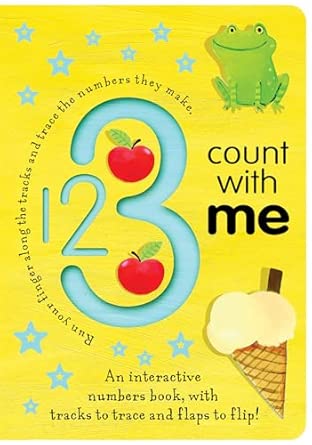 | Best for Early Counting Practice | Format: Interactive children’s book | Subject: Numbers and counting | Interactive features: Tracks to trace and flaps to flip | VIEW LATEST PRICE | See Our Full Breakdown |
| Stir Crack Whisk Bake: An Interactive Board Book about Baking for Toddlers and Kids |  | Best for Kitchen-Themed Play | Format: Interactive board book | Subject: Baking | Audience: Toddlers and kids | VIEW LATEST PRICE | See Our Full Breakdown |
| Peekaboo: Love (An Interactive Board Book for Babies & Toddlers with Mirror & Sliders) |  | Best for Baby Sensory Play | Format: Interactive board book | Audience: Babies and toddlers | Interactive features: Mirror and sliders | VIEW LATEST PRICE | See Our Full Breakdown |
| Where’s Spot?: A Lift-the-Flap Book |  | Best for Classic Hide-and-Seek Reading | Format: Lift-the-flap book | Character: Spot the puppy | Interactive feature: Flaps to lift | VIEW LATEST PRICE | See Our Full Breakdown |
| What’s in My House?: A Slide-And-Find Book |  | Best for Everyday Object Discovery | Format: Slide-and-find book | Subject: Household items | Interactive feature: Sliding discovery activities | VIEW LATEST PRICE | See Our Full Breakdown |
| interactive board book | Format | Intended audience | Theme |
|---|---|---|---|
| Peekaboo: Car | Board book | Babies and toddlers | Cars and other vehicles |
| Ocean Friends | Board book | Young children | Ocean friends |
| Hoppity Frog: A Slide-and-Seek | — | — | Frog |
| Press Here: Board Book Edition | — | Young children | — |
| Dear Zoo: A Lift-the-Flap Book | Lift-the-flap book | Young children | Zoo animals |
| Peekaboo: Dinosaur | Board book | Babies and toddlers | Dinosaurs |
| Imitation Book: Interactive & | Board book | Toddlers | — |
| That’s Not My Puppy: An Intera | Touch-and-feel book | Babies and toddlers | Puppies |
| Peekaboo: Dog | Interactive board book | Babies and toddlers | Dogs and puppies |
| Peekaboo: Pumpkin | Interactive board book | Babies and toddlers | Halloween |
| 123 Count with Me: An Interact | Interactive children’s book | Early learners | — |
| Stir Crack Whisk Bake: An Inte | Interactive board book | — | — |
| Peekaboo: Love | Interactive board book | — | — |
| Where’s Spot?: A Lift-the-Flap | Lift-the-flap book | — | — |
| What’s in My House?: A Slide-A | Slide-and-find book | — | — |
More Details on Our Top Picks
Peekaboo: Car – An Interactive Board Book for Babies & Toddlers with Mirror & Sliders
Peekaboo: Car pairs a mirror with sliders, giving babies more ways to interact than a book that relies on one kind of touch, such as Ocean Friends. The truck, bus, and tool artwork keeps the theme easy to point to and name, while moving the sliders gives little hands a simple task on each encounter. That makes this a good choice for shared play when a caregiver can narrate what the child sees and does. Its vehicle focus is also a narrower fit than the animal reveal in Dear Zoo, so it may hold less appeal for children who prefer varied creatures or stories. The supplied details do not specify age guidance or the number of interactive elements, so buyers seeking those specifics should check the edition before choosing.
Pros:- Combines mirror play with sliders rather than relying on a single interaction type
- Vehicle artwork offers clear subjects for naming and pointing
- Board-book format is described as suitable for toddlers
- Interactive elements support hands-on exploration and fine motor practice
Cons:- Vehicle-centered content may feel narrow for children who prefer animals or varied themes
- The provided information gives no specific age range
- The number and construction details of the sliders are not supplied
Best for: Caregivers looking for a vehicle-themed board book with both a mirror and sliders for babies and toddlers to explore together.
Not ideal for: Families seeking a broad story or many changing subjects; the described artwork centers on vehicles and related tools.
- Format:Board book
- Interactive features:Mirror and sliders
- Theme:Cars and other vehicles
- Described artwork:Truck, bus, tools, and more
- Intended audience:Babies and toddlers
- Developmental focus:Sensory exploration and fine motor skills
Our verdict“Choose Peekaboo: Car for young vehicle fans who will benefit from mirror-and-slider play, but pick a broader animal book if variety matters more.”
Ocean Friends – Touch and Feel Board Book
Ocean Friends is the clearest choice here for children who want to explore textures by touch. Its ocean-themed images give that sensory play a simple subject to talk about, while the described board-book construction suits repeated handling by young readers. Compared with Peekaboo: Car, it emphasizes tactile surfaces rather than moving parts or a mirror; that can make the interaction more direct, but it offers fewer kinds of activity. The supplied details do not identify the textures, their placement, or any lift-and-reveal features, so I would not choose it expecting a varied sequence of actions. It is better suited to short, adult-guided moments of looking and feeling than to older children seeking a developing story or more involved play.
Pros:- Tactile textures invite hands-on exploration
- Ocean theme gives caregivers familiar images to name and discuss
- Board-book format is described as suitable for young children
- Sensory focus offers a distinct alternative to books built around sliders or flaps
Cons:- The described content may have limited appeal as children get older
- No additional activities beyond tactile exploration are specified
- Texture types and page-by-page details are not provided
Best for: Caregivers of young children who want a simple ocean-themed book for guided touch-and-name exploration.
Not ideal for: Families seeking sliders, flaps, a mirror, or a more involved activity; the described interaction centers on textures.
- Format:Board book
- Interaction type:Touch-and-feel textures
- Theme:Ocean friends
- Intended audience:Young children
- Learning focus:Tactile learning and sensory exploration
- Additional activities:None specified in the provided description
Our verdict“Choose Ocean Friends for straightforward texture exploration, not for the moving parts or action variety found in Peekaboo: Car.”
Hoppity Frog: A Slide-and-Seek Book
Hoppity Frog makes the moving mechanism its main attraction: children slide elements to take part in a seek-and-find style interaction. That gives it a more active feel than the texture-focused Ocean Friends, while keeping the task centered on one simple action that can support early fine motor practice. Colorful illustrations and a frog-led theme give caregivers an easy starting point for naming and talking through the pages. The tradeoff is that the supplied description says less about the exact slide mechanisms or how much help each one needs, and it flags adult supervision for some activities. Compared with Dear Zoo, it offers sliding rather than flap lifting, so the better fit depends on which movement a child can manage and enjoys.
Pros:- Slide-and-seek interaction gives children an active role in the pages
- Sliding supports fine motor practice
- Colorful illustrations offer visual prompts for shared reading
- Frog theme provides a clear focus for the play
Cons:- Adult supervision is recommended for some activities
- The description does not detail the number or design of the sliding elements
- The content may be less engaging for older children
Best for: Caregivers seeking a colorful slide-and-seek book for a young child who enjoys moving pieces and playing alongside an adult.
Not ideal for: Buyers wanting detailed information about the mechanics or a book a child can use independently in every activity.
- Interaction format:Slide-and-seek book
- Main action:Sliding elements
- Theme:Frog
- Illustration style:Colorful illustrations
- Developmental focus:Fine motor skills and early learning
- Supervision note:Adult supervision is suggested for some activities
Our verdict“Pick Hoppity Frog for supervised slide-and-seek play; choose Dear Zoo instead if lift-the-flap animal reveals are the stronger draw.”
Press Here: Board Book Edition
Press Here stands apart because it asks children to press, shake, and tilt the book, making their own movements the activity rather than relying on sliders, textures, or flaps. That range of simple prompts gives it more action variety than Ocean Friends, whose interaction is tactile, and a different kind of participation from the hide-and-reveal format in Dear Zoo. The described cause-and-effect focus can help make shared reading feel like a playful exchange: a child follows a prompt, then watches for a result. Its tradeoff is that the supplied information does not describe physical page mechanisms or multimedia features, and the concept may be less compelling once a child wants a longer narrative. The board-book format is a practical match for small hands, but buyers should expect interaction through prompts and movement.
Pros:- Prompts children to press, shake, and tilt
- Focuses on cause and effect through child-led actions
- Offers a different interaction style from texture or flap books
- Board-book format is described as durable for young children
Cons:- The described interaction depends on prompts and movement rather than specified physical mechanisms
- No additional multimedia features are described
- The concept may offer limited appeal to older children
Best for: Caregivers who want a prompt-led book that invites children to move, press, and observe cause and effect during shared reading.
Not ideal for: Readers looking for tactile patches, sliders, or flaps to manipulate on the page, or an extended story.
- Edition:Board book edition
- Interactive prompts:Press, shake, and tilt
- Learning focus:Cause and effect
- Developmental focus:Motor skills
- Intended audience:Young children
- Multimedia features:None specified
Our verdict“Choose Press Here for simple movement-based cause-and-effect play, especially if you want an alternative to sliders and lift-the-flap pages.”
Dear Zoo: A Lift-the-Flap Book
Dear Zoo centers its interaction on lifting flaps to reveal zoo animals, making it a straightforward pick for children who enjoy guessing what is hidden. That reveal-based play differs from the repeated movement prompts in Press Here and the tactile exploration in Ocean Friends; its appeal is strongest when naming animals and anticipating each reveal are part of the fun. The zoo theme gives caregivers plenty of chances to talk about animal names and curiosity, without requiring the varied motor actions of a slider book. The tradeoff is a narrower activity range: the provided description names lift-the-flap interaction but no other features or page details. It is aimed at young children, so families seeking more complex play or content that grows with an older reader may prefer a book with broader activities.
Pros:- Lift-the-flap format invites guessing before each reveal
- Zoo animals provide an accessible subject for naming and conversation
- Interactive design encourages curiosity during shared reading
- Offers a distinct reveal-based option alongside sliders and touch textures
Cons:- The described activity is limited to lifting flaps
- No additional features or page count are supplied
- The content is described as suited to young children rather than older readers
Best for: Caregivers who want a simple animal-themed guessing and reveal book for young children during shared reading.
Not ideal for: Families seeking multiple interaction types, detailed activity information, or a book aimed at older children.
- Format:Lift-the-flap book
- Interaction type:Lift-the-flap reveals
- Theme:Zoo animals
- Intended audience:Young children
- Learning focus:Early learning and curiosity about animals
- Additional features:None specified in the provided description
Our verdict“Choose Dear Zoo for animal lovers who enjoy flap reveals; pick Hoppity Frog for a sliding interaction instead.”
Peekaboo: Dinosaur (An Interactive Board Book for Babies & Toddlers with Mirror & Sliders to Push, Pull, or Turn)
Peekaboo: Dinosaur pairs friendly dinosaur art with a mirror and sliders that invite babies and toddlers to push, pull, or turn parts of the book. That hands-on play gives little readers something to do on each page while practicing simple movements. Compared with Peekaboo: Dog, its dinosaur theme is the clearer choice for children already drawn to prehistoric creatures; the interaction style is similar, not a richer lesson plan. The board-book format suits repeated handling, but the appeal is aimed at very young readers: older children may outgrow the simple play, and the description gives no added educational activities beyond sensory exploration and fine-motor practice. I’d choose it for theme-led play rather than broad learning content.
Pros:- Mirror and sliders give young children clear ways to interact with the pages.
- Friendly dinosaur illustrations make the theme approachable for toddlers.
- Board-book construction is suited to frequent handling by young readers.
Cons:- Simple interactions and content may have limited appeal as children get older.
- The supplied description does not identify added learning features beyond sensory and fine-motor play.
Best for: Parents of babies and toddlers who are especially interested in dinosaurs and enjoy push-and-pull play.
Not ideal for: Families seeking a book with substantial story progression, detailed facts, or activities that will hold an older preschooler’s attention.
- Format:Board book
- Intended audience:Babies and toddlers
- Theme:Dinosaurs
- Interactive features:Mirror and sliders
- Slider actions:Push, pull, or turn
- Developmental focus:Sensory exploration and fine motor skills
Our verdict“Choose this for a toddler who loves dinosaurs and is ready to explore sliders, but pick a more content-rich book for an older child.”
Imitation Book: Interactive & Fun Learn to Talk Board Book for Toddlers Ages 0-4, Written by a Speech Therapist
Imitation Book takes a different route from the peekaboo titles in this roundup: its stated purpose is to encourage speech and language through imitation activities, rather than centering on mirrors, sliders, or tactile patches. That makes it the more focused pick for caregivers who want shared play to support early communication. The title specifies an age range of 0–4, while the description identifies a speech therapist as the author. However, the available product information does not explain the activity sequence or how varied the prompts are, so I can’t judge how well the book sustains repeated sessions. Compared with Peekaboo: Dinosaur, it offers a clearer language-development focus but less detail about its physical interactions. Choose it for guided imitation, not elaborate page mechanics.
Pros:- Designed around speech and language development through imitation.
- Written by a speech therapist, giving the book a stated professional perspective.
- Identifies an age range from birth through four years.
Cons:- The available description does not explain the variety or sequence of activities.
- Its interaction details are less explicit than the mirror-and-slider play in Peekaboo: Dog.
Best for: Caregivers of children from birth to age four who want a board book centered on imitation and early speech practice.
Not ideal for: Shoppers looking for clearly described sliders, flaps, textures, or a specific set of language activities before buying.
- Format:Board book
- Intended audience:Toddlers
- Stated age range:0–4 years
- Primary focus:Speech and language development
- Activity type:Imitation activities
- Author qualification:Written by a speech therapist
Our verdict“Pick this for a young child whose shared-book time is meant to encourage imitation and early talking, provided the limited activity detail is acceptable.”
That’s Not My Puppy: An Interactive Touchy-Feely Book for Babies and Toddlers
That’s Not My Puppy makes touch the main event: tactile patches and illustrations invite babies and toddlers to explore by feeling the page. This gives it a different kind of interaction from the sliders in Peekaboo: Dog, which ask little hands to move a mechanism rather than compare textures. The puppy theme keeps the subject familiar, while the sensory format can make shared reading active even before a child follows a story. The tradeoff is that the product information describes the tactile element broadly, without specifying the number or variety of patches. It also calls for supervision to help prevent tearing, so it may be less suited to unsupervised handling than a sturdier-feeling board book. I’d favor it when texture matters more than moving parts.
Pros:- Tactile patches make touch-and-feel exploration the central activity.
- Puppy illustrations give the sensory play a familiar subject.
- Designed for babies and toddlers to engage with during shared reading.
Cons:- The supplied details do not specify the number or range of tactile patches.
- Supervision is advised to reduce the chance of patches or pages being torn.
- Its tactile interaction may not satisfy children looking for sliders or more varied mechanisms.
Best for: Caregivers seeking a puppy-themed first book that gives babies and toddlers tactile details to explore together.
Not ideal for: Families who need a book for rough, unsupervised handling or want sliders and other moving mechanisms.
- Format:Touch-and-feel book
- Intended audience:Babies and toddlers
- Theme:Puppies
- Interactive feature:Tactile patches
- Reading activity:Touch-and-feel exploration
- Use guidance:Supervision advised to help prevent tearing
Our verdict“Choose this for supervised, texture-focused reading with a young puppy fan rather than for children who want moving parts.”
Peekaboo: Dog – An Interactive Board Book for Babies & Toddlers with Mirror & Sliders
Peekaboo: Dog combines puppy artwork with a mirror and sliders, giving babies and toddlers a repeatable push, pull, and turn activity. Its appeal is straightforward: children can handle the book while exploring a familiar animal theme, and the actions offer simple fine-motor practice. Compared with That’s Not My Puppy, this is the better fit for a child who wants to move pieces rather than feel textures; the other title makes tactile patches its main feature. The two Peekaboo options have a similar interaction format, so the deciding factor between this and Peekaboo: Dinosaur is likely the child’s interest in puppies versus dinosaurs. Its simple content may not hold older children, and the description notes durability can vary under heavy use.
Pros:- Mirror and sliders offer several simple ways to engage with the pages.
- Puppy artwork gives the book a familiar, toddler-friendly theme.
- Push, pull, and turn actions encourage sensory exploration and fine-motor practice.
Cons:- The simple format may offer limited interest for older children.
- Durability may vary with heavy use, according to the supplied product details.
Best for: Families with babies or toddlers who love dogs and want mirror-and-slider interactions for shared play.
Not ideal for: Older preschoolers seeking more involved content, or households where books are likely to face especially rough handling.
- Format:Interactive board book
- Intended audience:Babies and toddlers
- Theme:Dogs and puppies
- Interactive features:Mirror and sliders
- Slider actions:Push, pull, or turn
- Developmental focus:Sensory exploration and fine motor skills
Our verdict“Pick this over That’s Not My Puppy when a young dog fan prefers moving sliders to exploring tactile patches.”
Peekaboo: Pumpkin – An Interactive Board Book for Babies & Toddlers
Peekaboo: Pumpkin brings the Peekaboo series’ hands-on approach to Halloween, with mirrors, sliders, and push, pull, or turn elements alongside a bat, black cat, witch, and other seasonal characters. That theme makes it a natural choice for autumn reading or a small child’s first playful introduction to Halloween imagery. Compared with Peekaboo: Dinosaur and Peekaboo: Dog, its strongest distinction is the seasonal subject—not a different interaction style. The shared mechanics make those animal-themed books easier to choose for year-round use, while Pumpkin has a more specific occasion-based appeal. The description does not give a precise age range or explain additional learning content, so I’d treat it as interactive seasonal play rather than a teaching resource.
Pros:- Mirror and sliders give young children hands-on ways to explore the pages.
- Halloween imagery includes a bat, black cat, and witch.
- Push, pull, and turn actions suit simple early play.
Cons:- The seasonal theme may see less use outside Halloween time.
- The supplied description does not specify an age range.
- No additional educational features are detailed.
Best for: Families with babies and toddlers who want an interactive book for Halloween-season reading and play.
Not ideal for: Buyers seeking a year-round theme, a clearly stated age range, or detailed educational content.
- Format:Interactive board book
- Intended audience:Babies and toddlers
- Theme:Halloween
- Featured characters:Bat, black cat, witch, and others
- Interactive features:Mirror and sliders
- Slider actions:Push, pull, or turn
Our verdict“Choose this for Halloween-themed interaction with a toddler, but opt for Peekaboo: Dog or Peekaboo: Dinosaur for a less seasonal subject.”
123 Count with Me: An Interactive Numbers Book with Tracks to Trace and Flaps to Flip
Tracing and flaps give this numbers book two ways to invite a child into counting: little readers can follow the tracks and lift pages as they explore. That makes it a more focused choice for early number practice than Where’s Spot?, which centers on a simple search-and-find story rather than math. The hands-on format can also support fine motor practice alongside number recognition, a useful pairing for a child who learns by doing. Its scope is narrow, though: the supplied details describe basic counting activities, not a broader set of puzzles or escalating challenges. Families looking for varied sensory play may get more mileage from Peekaboo: Love, while this book fits best when numbers are the goal.
Pros:- Combines tracing and lift-the-flap interaction
- Directs play toward early counting skills
- Offers fine motor practice through hands-on activities
Cons:- Activity scope is limited to basic counting
- May not hold the interest of children ready for more advanced number work
Best for: Caregivers seeking a hands-on first counting book for toddlers who enjoy tracing paths and lifting flaps.
Not ideal for: Families seeking advanced number concepts, a wide range of activities, or sensory features beyond tracing and flaps.
- Format:Interactive children’s book
- Subject:Numbers and counting
- Interactive features:Tracks to trace and flaps to flip
- Learning focus:Early math skills
- Additional developmental focus:Fine motor development
- Intended audience:Early learners
Our verdict“Choose this for a young learner who will benefit from pairing simple counting with tracing and flap play.”
Stir Crack Whisk Bake: An Interactive Board Book about Baking for Toddlers and Kids
Baking as the theme sets this board book apart from the roundup’s animal searches and sensory titles: it offers a playful entry point to kitchen activities and simple instructions. That makes it a natural pick for a child who likes helping with mixing or watching food being made, even before they can take part in every step. Compared with 123 Count with Me, it is less focused on a defined learning skill and more about connecting a familiar activity with reading. The supplied details do not specify exactly what children do on each page, so I would not choose it for a particular mechanism or a detailed cooking lesson. It suits themed shared reading better than families seeking a clear, repeatable counting or search game.
Pros:- Introduces baking through a child-friendly book theme
- Uses simple instructions suited to shared reading
- Can connect storytime with interest in everyday kitchen activities
Cons:- Available details do not explain the specific interactive mechanisms
- No age range is specified
- Less clearly directed toward a measurable learning skill than a counting book
Best for: Caregivers of toddlers and young children who enjoy kitchen routines and want a baking-themed interactive read-aloud.
Not ideal for: Buyers who need clearly described page mechanics, a specified age range, or a focused early-learning curriculum.
- Format:Interactive board book
- Subject:Baking
- Audience:Toddlers and kids
- Content:Illustrations and simple instructions
- Activity focus:Baking and cooking interest
- Specified age range:Not provided
Our verdict“Pick this for a child drawn to baking and kitchen routines, rather than for a specific skill-building activity.”
Peekaboo: Love (An Interactive Board Book for Babies & Toddlers with Mirror & Sliders)
Mirror and sliders make this the clearest baby-focused sensory pick in this group. Babies and toddlers can look, move a slider, and engage with the mirror, giving the book a more tactile, exploratory feel than Stir Crack Whisk Bake, whose described appeal centers on a theme and simple instructions. The colorful illustrations—featuring strawberries, rainbows, and ladybugs—add visual variety, while the board-book format is described as durable for young children. Its strengths are interaction and sensory discovery, not a detailed learning sequence; the supplied information does not identify specific educational goals or describe what each slider reveals. Compared with What’s in My House?, it is less about naming household objects and more about playful visual and physical exploration.
Pros:- Includes a mirror and sliders for hands-on exploration
- Uses colorful artwork with varied pictured subjects
- Board-book format is described as durable for young children
- Designed for both babies and toddlers
Cons:- Specific learning outcomes are not provided
- The available description does not explain what each slider reveals
- No precise age range is specified
Best for: Caregivers looking for a sturdy-feeling, hands-on first book with a mirror and sliders for baby or toddler storytime.
Not ideal for: Buyers seeking a clearly outlined lesson, detailed content description, or a stated age range.
- Format:Interactive board book
- Audience:Babies and toddlers
- Interactive features:Mirror and sliders
- Artwork:Colorful illustrations
- Illustrated subjects:Strawberries, rainbows, and ladybugs
- Play focus:Sensory exploration and early learning
- Construction:Durable board-book format
Our verdict“Choose this for baby-led visual and tactile play, not for a structured early-learning lesson.”
Where’s Spot?: A Lift-the-Flap Book
Lift-the-flap searching gives this classic a straightforward job: invite young readers to look for Spot the puppy and reveal what is behind each flap. That familiar game makes it easier to share than a theme-led title like Stir Crack Whisk Bake, which introduces baking but has fewer specific interaction details in the supplied description. It also differs from 123 Count with Me: the appeal here is curiosity and participation in a story, not number practice. The simple format is approachable for early readers, but its limited content may not satisfy older children or families seeking more varied sensory mechanics. Choose it for a puppy-led search-and-find read, rather than a broad activity book.
Pros:- Uses lift-the-flap play to prompt searching and curiosity
- Centers on the recognizable character Spot the puppy
- Pairs a simple interactive game with a story
- Accessible format for young readers
Cons:- Limited content may not engage older children for long
- Simple illustrations may not suit every child’s visual preferences
- Offers less variety of interaction than books with sliders or sensory features
Best for: Caregivers seeking a simple, story-led lift-the-flap book for young children who enjoy searching for a character.
Not ideal for: Families with older preschoolers seeking more complex challenges or children who prefer textured or multi-mechanism interaction.
- Format:Lift-the-flap book
- Character:Spot the puppy
- Interactive feature:Flaps to lift
- Activity:Search-and-find
- Audience:Young children and early readers
- Illustration style:Simple illustrations
Our verdict“Pick this for young readers who enjoy a simple puppy search, rather than for varied or advanced interactive play.”
What’s in My House?: A Slide-And-Find Book
Slide-and-find play turns familiar household objects into a small discovery game, making this the most everyday-life-focused option among these five. A child can explore what is found around a house, while Where’s Spot? uses flaps to build a character search and Peekaboo: Love leans on a mirror and sensory exploration. That distinction matters: this title is a better fit for caregivers who want reading to prompt talk about objects children may recognize at home. Its scope stays narrow, though, and the supplied description does not identify extra features or more advanced activities. Families seeking a broader tactile experience may prefer the mirror and sliders in Peekaboo: Love; this book is for simple, familiar-object discovery.
Pros:- Uses sliding interaction to make object discovery active
- Focuses on familiar household items
- Can prompt conversation about objects in a child’s surroundings
Cons:- Content is aimed at young children and may have limited appeal as they grow
- No additional features or digital content are specified
- Available details do not describe the range of objects or slide activities
Best for: Caregivers who want a young child to explore and talk about familiar household objects through a simple sliding game.
Not ideal for: Families seeking content for older children, a wider range of learning activities, or added digital features.
- Format:Slide-and-find book
- Subject:Household items
- Interactive feature:Sliding discovery activities
- Activity:Find objects around a house
- Audience:Young children
- Additional digital content:None specified
Our verdict“Choose this for a young child who enjoys sliding to discover familiar things found around the house.”

How We Picked
I compared these books by the kind of participation they invite, how clearly that action supports shared reading, and how well the format fits babies and toddlers. I also weighed practical factors: whether moving parts may need closer supervision, how much the book can be revisited, and whether its subject or learning focus gives families a reason to choose it over a similar format.
The ranking favors books with a clear, repeatable interaction and broad usefulness across reading moments. Press Here ranks first because it creates participation without depending on attached mechanisms; books with flaps, textures, sliders, or focused learning goals follow according to their distinct strengths and likely audience. Several titles use closely related formats, so their positions reflect differences in theme and purpose rather than a claim that one theme is universally better. No single format suits every child: a tactile explorer, a flap-lifter, and a child ready for imitation play may each prefer a different pick.
| interactive board book | Format | Intended audience |
|---|---|---|
| Peekaboo: Car | Board book | Babies and toddlers |
| Ocean Friends | Board book | Young children |
| Hoppity Frog: A Slide-and-Seek | — | — |
| Press Here: Board Book Edition | — | Young children |
| Dear Zoo: A Lift-the-Flap Book | Lift-the-flap book | Young children |
| Peekaboo: Dinosaur | Board book | Babies and toddlers |
| Imitation Book: Interactive & | Board book | Toddlers |
| That’s Not My Puppy: An Intera | Touch-and-feel book | Babies and toddlers |
| Peekaboo: Dog | Interactive board book | Babies and toddlers |
| Peekaboo: Pumpkin | Interactive board book | Babies and toddlers |
| 123 Count with Me: An Interact | Interactive children’s book | Early learners |
| Stir Crack Whisk Bake: An Inte | Interactive board book | — |
| Peekaboo: Love | Interactive board book | — |
| Where’s Spot?: A Lift-the-Flap | Lift-the-flap book | — |
| What’s in My House?: A Slide-A | Slide-and-find book | — |
Factors to Consider When Choosing Best Interactive Board Books
Interactive books can look similar on a shelf while asking children to do very different things. I’d start with the kind of play your child already enjoys, then weigh supervision, repeat use, and whether you want a learning focus or simple shared fun.
Match the interaction to your child’s current interests
Choose an action your child can already attempt or is keen to repeat: touching textures, lifting flaps, sliding pieces, or following a spoken prompt. A child who likes handling objects may get more from tactile pages than from a book that asks them to respond with gestures. A child who enjoys hide-and-find games may stay engaged longer with flaps or sliders. Avoid choosing only by the age printed on a listing; attention, coordination, and interest vary widely. You can also think about where the book will be read, since a prompt-based book works well with an adult while some tactile exploration can hold attention during quieter moments. The best match is the one that makes your child want to take another turn.
Choose mechanisms with supervision in mind
Flaps, sliders, and pull tabs offer satisfying cause and effect, but they also create parts a child can tug repeatedly. For younger babies or enthusiastic page-turners, sit nearby and guide the movement rather than assuming every mechanism will withstand rough handling. Books that invite clapping, pointing, or other actions without attached pieces avoid that particular wear point. Texture books have a different care question: check whether the tactile areas can be wiped clean according to the publisher’s instructions. A sturdy board format helps with everyday handling, but it does not make a book indestructible. If a book will travel in a bag, simpler construction may be easier to keep in good shape.
Decide whether you want play, learning, or both
Some interactive books are built mainly for a playful reading routine, while others add a targeted goal such as imitation, counting, or vocabulary. A learning-oriented title can be useful when an adult is ready to model sounds, trace shapes, or name objects alongside the child. It may feel less appealing as a quick, relaxed read if the child wants open-ended play instead. Conversely, a simple peekaboo or touch-and-feel book can invite repeated reading without asking a child to complete a task. Think about the role the book should fill in your home, not just the skills named in its description. For many families, one playful title and one focused title serve different needs better than expecting one book to do everything.
Look for variety without buying duplicates
Several books in this group share the same core format, especially the mirror-and-slider Peekaboo titles. If your child already has one and enjoys it, another theme may still be welcome, but it may not add a new kind of play. A varied small collection could pair a tactile book with a flap story and an action-led title. That mix gives children different ways to participate without making every reading session feel alike. Before adding another book, ask whether the new one brings a fresh interaction, a topic your child loves, or a useful change of pace. This is a better guide to variety than counting how many features appear on the cover.
Think about repeat reading and shared participation
Interactive books tend to work best when the action is easy to repeat and an adult can join in naturally. Prompts that leave room for pointing, naming, or taking turns can adapt as a child’s communication grows. A reveal book may be exciting at first, then become a familiar guessing game that supports repetition. Tactile books offer a different reason to return: the child can explore the page at their own pace. If you mainly read before sleep or during short breaks, favor a format that does not require extensive setup or careful positioning. A book that fits your regular routine is more likely to be read often than one with a clever feature that is awkward to use.
Pay for a purpose, not a longer feature list
A premium-feeling book is only a better buy if its construction, interaction, or subject fits how your family will use it. More mechanisms do not automatically mean more engagement, and a focused learning title may be worthwhile only if you plan to use its activity with your child. For a first interactive book, a straightforward format can help you learn what your child enjoys before you build a collection. Families with a clear interest—such as baking, animals, or early counting—may get more use from a themed book than from a broader one. Consider durability alongside the child’s ability to operate the feature, since a mechanism that needs constant adult help may not serve independent exploration. Choose the simplest book that meets your actual reading goal.
Frequently Asked Questions
Which interactive board book is the best first choice for a baby?
For a baby’s first interactive book, I’d favor a clear action that an adult can model without asking the child to manage several moving parts. Ocean Friends offers tactile discovery, while Press Here makes participation part of a shared reading routine. The right fit depends on whether your baby is more drawn to touching or watching and responding. Stay close during reading, especially with books that have flaps or sliders. You can add more complex mechanisms as your child becomes more interested in operating them.
Are sliders or lift-the-flap books better for toddlers?
Neither format is automatically better; they reward different kinds of play. Sliders invite children to move a piece and watch an immediate change, while flaps build anticipation around revealing what is hidden. If your toddler likes repeating a physical action, a slider book may be a strong fit; if they enjoy guessing, a flap story may hold attention. Both types can wear with forceful handling, so supervise children who pull hard or mouth pages. Choose based on the action your child already enjoys, not on the assumption that one mechanism is more advanced.
Should I buy several Peekaboo books, or choose different formats?
The Peekaboo titles in this roundup share a mirror-and-slider style, so choosing several mainly adds new themes rather than new mechanics. That can make sense if your child is especially attached to a subject such as dinosaurs, dogs, cars, pumpkins, or love-themed interactions. If you want a broader range of play, pair one Peekaboo title with a tactile book, a flap book, or an action-led title such as Press Here. This gives your child more ways to participate without duplicating the same basic experience. Start with one theme your child recognizes, then add another only if that format gets regular use.
Can an interactive board book support speech or counting practice?
Yes, a book can create opportunities to model words, sounds, or number concepts, but the book alone does not replace back-and-forth interaction with an adult. Imitation Book is the focused choice for communication play, while 123 Count with Me combines number content with tracing and flaps. Keep the activity relaxed: name what you see, pause for a response, and follow your child’s attention rather than turning reading into a quiz. If a child is receiving professional support, ask their clinician how a book might complement existing activities. A playful shared routine is often more sustainable than trying to cover too many learning goals in one sitting.
What should I check before giving a board book to a very young child?
Check the publisher’s age guidance and look closely at the construction, especially any flaps, sliders, or other moving pieces. Board pages are designed for young readers, but attached mechanisms can still be pulled, bent, or mouthed. Read together and inspect the book periodically for loose or damaged parts. For books with tactile patches, follow the care instructions and avoid assuming every surface can be washed. If your child is still exploring books by chewing, adult supervision matters more than the number of interactive features.
Conclusion
For the broadest fit, I’d choose Press Here as the best overall because it makes reading participatory without relying on attached moving parts. For a tactile first pick, Ocean Friends is the best choice for beginners who are drawn to textures; for a familiar reveal game, Dear Zoo offers a strong lift-the-flap option. The best value depends on the play style your child will revisit: choose one Peekaboo title if sliders and a mirror appeal, rather than buying several near-duplicates. For a premium or purpose-led choice, start with the specific need: Imitation Book for communication play, 123 Count with Me for early number activities, or Stir Crack Whisk Bake for a cooking theme. If your child prefers searching and discovery, compare Where’s Spot? with What’s in My House? and choose the story format they are more likely to repeat.
Halloween Picks
halloween
As an affiliate, we earn on qualifying purchases.