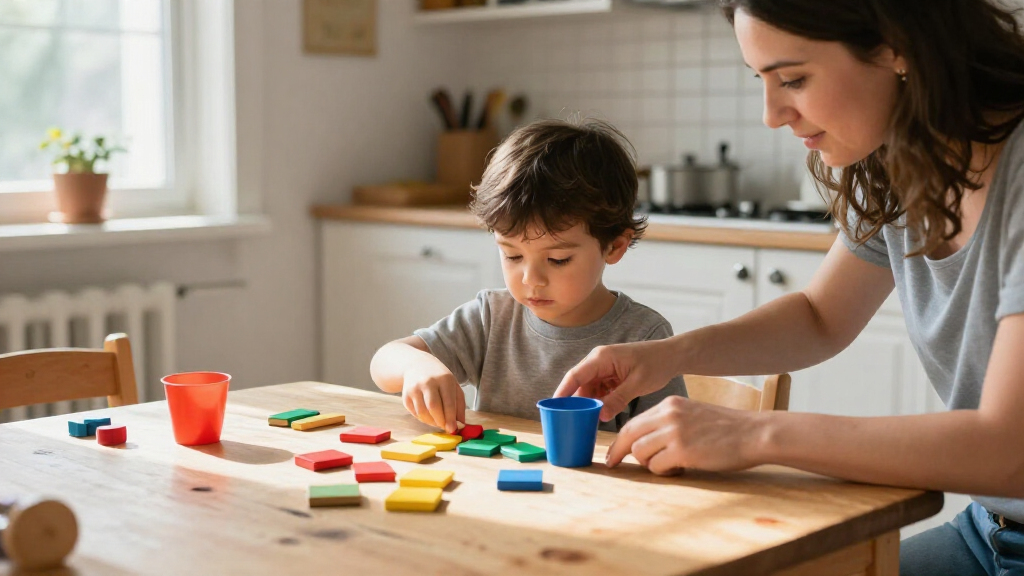
The best color matching games balance clear, satisfying color play with the right level of challenge for their players. My best overall pick is Hues and Cues, which turns color recognition into a lively group guessing game; SmartGames Color Code stands out for solo logic puzzles, while Pete the Cat I Love My White Shoes suits young children learning colors through a familiar story. The main tradeoff is between simple hands-on matching for little kids and games that add memory, strategy, or social deduction for older players. Some sets also rely on small pieces or repeated challenges, which can shape how well they fit a household. Read on for the full breakdown and help matching a game to your players.

Give the gift of listening to the whole family
- Choose a 1-, 3-, 6- or 12-month membership
- They pick the audiobooks they love
- Easy to send by email
Complete the kit


Key Takeaways
- Hues and Cues is the clearest choice for group play because players interpret color clues and compare perceptions, rather than simply matching identical pieces.
- SmartGames Color Code fills a different role from the social games: it offers solo, layered visual puzzles for players who want a quiet logic challenge.
- Story-led picks such as Pete the Cat and The Very Hungry Caterpillar Rainbow Picnic are better suited to young children than strategy-focused sets.
- Several listings are variations on color-stacking challenges, so buyers should compare components and player setup rather than assuming every similarly named game offers a distinct experience.
- Bottle color-matching games add memory and sorting demands, but their small pieces and repeated challenge format may be less suitable for very young players or households seeking a larger group game.
| MasterPieces Colors & Shapes Matching Puzzle Game for Kids, Ages 3+ |  | Best for Shape-and-Color Basics | Brand: MasterPieces | Age range: 3 years and up | Material: Cardboard | VIEW LATEST PRICE | See Our Full Breakdown |
| The Very Hungry Caterpillar Rainbow Picnic Color Matching Game |  | Best Preschool Group Game | Brand: Briarpatch | Manufacturer: University Games | Age range: 3 years and up | VIEW LATEST PRICE | See Our Full Breakdown |
| Color Challenge Color-Matching Stacking Game, 2-Pack |  | Best for Adjustable Challenge | Brand: Hcusus | Minimum age: 6 years | Players: 2 listed | VIEW LATEST PRICE | See Our Full Breakdown |
| Educational Insights Pete the Cat I Love My White Shoes Game |  | Best Character-Led Pick | Brand: Educational Insights | Age range: 3–6 years | Players: 2–4 | VIEW LATEST PRICE | See Our Full Breakdown |
| Learning Resources Color Cubed Strategy Game |  | Best for Mixed-Age Groups | Brand: Learning Resources | Model number: LER9283 | Players: 2–6 | VIEW LATEST PRICE | See Our Full Breakdown |
| Minoskia 2-Pack Color Matching Challenge Game for 2–4 Players |  | Best for Flexible Group Play | Players: 2–4 | Included: 2 ring-stacking games | Material: Plastic | VIEW LATEST PRICE | See Our Full Breakdown |
| Vodolo Bottle Color Matching Game Set, 20 Pieces |  | Best for Portable Preschool Matching | Players: 2 | Pieces: 20 bottles in 10 colors | Included: Two sorting boxes and storage bag | VIEW LATEST PRICE | See Our Full Breakdown |
| Color Stack Challenge Color Matching Game |  | Best for Quick Solo-or-Duel Puzzles | Players: 1–2 | Recommended age: 6 years and up | Included: 2 racks, 80 rings, 50 challenge cards, instructions | VIEW LATEST PRICE | See Our Full Breakdown |
| Color Matching Challenge Stacking Game, 2-Pack |  | Best for Connectable Group Challenges | Players: 2–4 | Play modes: Solo and competitive | Included: 2 stacking racks, 80 rings, 50 challenge cards, connectors, instructions | VIEW LATEST PRICE | See Our Full Breakdown |
| SmartGames Color Code Transparent Tile Logic Puzzle |  | Best for Progressive Solo Logic | Players: 1 | Age range: 5 years and up | Material: Plastic | VIEW LATEST PRICE | See Our Full Breakdown |
| Vodolo Bottle Color Match Game, 20-Piece Family Memory and Logic Game |  | Best for Portable Memory Play | Brand: Vodolo | Model: CA-287 | Components: 20 bottles in 10 colors, two sorting boxes, storage bag | VIEW LATEST PRICE | See Our Full Breakdown |
| FLLOBE Color Challenge Game Set with 2 Racks, 100 Cards, 120 Rings, and Bell |  | Best for Adjustable Ring-Stacking Challenges | Brand: FLLOBE | Model: SCDD002 | Recommended age: 6 years and up | VIEW LATEST PRICE | See Our Full Breakdown |
| 2-Pack Color Matching Challenge Game for 2–4 Players |  | Best for Compact Head-to-Head Pattern Play | Players: 1 player using both boards or 2 players head-to-head | Recommended age: 3 years and up | Material: Plastic | VIEW LATEST PRICE | See Our Full Breakdown |
| Hues and Cues – Vibrant Color Guessing Board Game |  | Best for Creative Group Color Guessing | Brand: USAOPOLY | Players: 3–10 | Age range: 8+ years | VIEW LATEST PRICE | See Our Full Breakdown |
| color matching game | Players | Material | Brand | Recommended age |
|---|---|---|---|---|
| MasterPieces Colors & Shapes M | — | Cardboard | MasterPieces | — |
| The Very Hungry Caterpillar Ra | 2 to 4 | Cardboard | Briarpatch | — |
| Color Challenge Color-Matching | 2 listed | — | Hcusus | — |
| Educational Insights Pete the | 2–4 | Cardboard and plastic | Educational Insights | — |
| Learning Resources Color Cubed | 2–6 | Plastic | Learning Resources | — |
| Minoskia 2-Pack Color Matching | 2–4 | Plastic | — | 36 months–10 years |
| Vodolo Bottle Color Matching G | 2 | ABS plastic | — | 36 months–4 years (description also mentions ages 4–12) |
| Color Stack Challenge Color Ma | 1–2 | — | WHAT DO YOU MEME? | 6 years and up |
| Color Matching Challenge Stack | 2–4 | Plastic | — | 8 years and up |
| SmartGames Color Code Transpar | 1 | Plastic | — | — |
| Vodolo Bottle Color Match Game | 2 | ABS plastic | Vodolo | 36 months–4 years |
| FLLOBE Color Challenge Game Se | — | — | FLLOBE | 6 years and up |
| 2-Pack Color Matching Challeng | 1 player using both boards or 2 players head-to-head | Plastic | — | 3 years and up |
| Hues and Cues | 3–10 | — | USAOPOLY | — |
More Details on Our Top Picks
MasterPieces Colors & Shapes Matching Puzzle Game for Kids, Ages 3+
Color and shape matching in a puzzle format makes this a good fit for preschoolers who are ready to work through visual clues at their own pace. Unlike The Very Hungry Caterpillar Rainbow Picnic Color Matching Game, which adds turn-taking and a race to fill boards, this option centers on assembling matching puzzles, so play can be solo or shared without a competitive goal. Thick recycled board material, paper-backed pieces, and non-toxic, soy-based inks are practical touches for a screen-free activity aimed at young children. The tradeoff is limited detail: the product information does not state how many pieces are included or their size, making it harder to judge the challenge and how manageable the pieces will be. Choose it for simple matching practice, not a varied group game.
Pros:- Combines color and shape recognition in a puzzle activity.
- Supports problem-solving, logical thinking, and spatial awareness.
- Uses thick recycled board with non-toxic, soy-based inks.
- Paper-backed pieces are designed for added sturdiness.
Cons:- The number and size of puzzle pieces are not specified.
- Designed for ages 3 and up, so it may not suit younger children.
- Puzzle play offers less group interaction than Rainbow Picnic or the Pete the Cat game.
Best for: Caregivers of children ages 3 and up who want a screen-free puzzle for practicing both colors and shapes.
Not ideal for: Families seeking clear piece-count details, a structured multiplayer game, or a more advanced challenge for older children.
- Brand:MasterPieces
- Age range:3 years and up
- Material:Cardboard
- Included components:Colors & Shapes Matching Jigsaw Puzzles
- Model number:11949
- Unit count:1
Our verdict“Pick this for preschoolers who benefit from quiet color-and-shape puzzle practice rather than turn-based group play.”
The Very Hungry Caterpillar Rainbow Picnic Color Matching Game
Rainbow boards, food pieces, and draw cards give this preschool game a clear shared goal: players match colorful items and try to complete six colors first. Compared with the MasterPieces Colors & Shapes Matching Puzzle Game, it brings more turn-taking and movement into color practice, while the MasterPieces puzzle is better suited to independent matching. Its 20-minute playtime and support for two to four players suit short family or preschool sessions, and the familiar Very Hungry Caterpillar theme gives young children an inviting way into the rules. The tradeoff is that the simple race may offer limited replay appeal to older kids, and its cardboard components may not stand up as well to rough handling as sturdier play pieces. It is a social starter game, not a deep strategy choice.
Pros:- Practices color recognition and vocabulary through matching food items.
- A 20-minute playtime suits young children’s shorter game sessions.
- Includes four rainbow boards for group play.
- The familiar Very Hungry Caterpillar theme can help draw preschoolers into play.
Cons:- Supports no more than four players.
- Simple matching and race mechanics may feel repetitive to older children.
- Cardboard components may be less durable with rough handling.
Best for: Families and preschool groups with children ages 3 and up who want a short, themed color-matching game for two to four players.
Not ideal for: Larger groups, older children looking for more strategic decisions, or households that need components suited to rough handling.
- Brand:Briarpatch
- Manufacturer:University Games
- Age range:3 years and up
- Players:2 to 4
- Playing time:20 minutes
- Dimensions:10.5 × 8 × 2 inches
- Material:Cardboard
- Included components:4 Rainbow Boards, 24 Food Items and Stands, Game Board, 36 Cards, Instructions
Our verdict“Choose Rainbow Picnic for short, social color practice with preschoolers, but skip it if you need a challenge for older players or a larger group.”
Color Challenge Color-Matching Stacking Game, 2-Pack
Two difficulty levels and 100 challenge cards give this stacking game more room to grow than the preschool-focused Rainbow Picnic. Players use rings and stack racks to reproduce card patterns, with a bell adding a head-to-head finish; the set also supports solo play, so it can work when only one child is available. Compared with Learning Resources Color Cubed Strategy Game, this pick makes color patterns tactile and competitive, while Color Cubed keeps play compact and card-based for a wider group. The Easy and Hard modes offer a useful change of pace, but the listed two-player format limits group use. Small rings and poles may also be awkward for younger hands, so the age-six minimum matters. Choose it for focused pattern challenges, not broad family play.
Pros:- Easy and Hard modes provide different levels of pattern challenge.
- Can be played solo or head-to-head.
- Includes 100 challenge cards and two stack racks.
- Drawstring storage bag supports carrying and storage.
Cons:- Listed for two players, limiting group play.
- Small rings and poles may be difficult for younger children to handle.
- Requires more pieces and setup than the compact Color Cubed card game.
Best for: Two children ages 6 and up, or a solo player, who want hands-on pattern matching with a choice of difficulty.
Not ideal for: Families seeking a game for more than two players or children who may struggle with small rings and poles.
- Brand:Hcusus
- Minimum age:6 years
- Players:2 listed
- Modes:Easy and Hard
- Challenge cards:100 (50 Easy, 50 Hard)
- Rings:120
- Poles and racks:16 poles; 2 stack racks
- Dimensions:10 × 7 inches
- Included accessories:Bell, drawstring storage bag, instructions
Our verdict“Choose this set for solo practice or two-player pattern races, and choose Color Cubed instead for a larger group and simpler packing.”
Educational Insights Pete the Cat I Love My White Shoes Game
Character-led color matching and an easy group format make this a friendly first board game for children ages 3 to 6. Players use color wheel boards, tokens, and a guitar-shaped randomizer, adding a playful theme to early matching while giving children practice with turn-taking and sportsmanship. Compared with The Very Hungry Caterpillar Rainbow Picnic Color Matching Game, this Pete the Cat game also supports two to four players but uses a color randomizer rather than food-card collection, so the appeal depends more on the familiar character than on gathering themed pieces. The board doubles as storage, which can make setup and cleanup less of a chore. Its main limitation is the age range: older children may want more decisions, and cardboard parts may take wear from rough handling.
Pros:- Familiar Pete the Cat theme supports an inviting introduction to matching.
- Practices color recognition alongside turn-taking and sportsmanship.
- Supports two to four players.
- Game board doubles as storage for easier cleanup.
Cons:- Play is limited to four players.
- Cardboard components may be less durable with rough handling.
- The preschool age range and straightforward matching may not hold older children’s interest.
Best for: Pete the Cat fans and caregivers seeking a quick-to-set-up color game for children ages 3 to 6 in a small family or classroom group.
Not ideal for: Older children seeking strategic depth, groups larger than four, or families whose young players are rough with cardboard components.
- Brand:Educational Insights
- Age range:3–6 years
- Players:2–4
- Material:Cardboard and plastic
- Included components:4 Pete the Cat color wheel boards, 16 colored tokens, guitar-shaped color randomizer, game board
- Model number:3470
- Warranty:1 year against manufacturer defects
Our verdict“Pick this for young Pete the Cat fans who need a simple social color game, not for older players seeking strategic variety.”
Learning Resources Color Cubed Strategy Game
Pattern scanning, color discrimination, and card-based play give Color Cubed a broader age appeal than the preschool games in this lineup. Designed for two to six players ages 5 and up, it can bring children and adults into the same game without the small physical pieces found in the Color Challenge Color-Matching Stacking Game. Its compact box is easier to store or take along, and the activity guide adds an educational angle beyond simply spotting a color. The tradeoff is that matching remains the central task, so players who want tactile building or a narrative theme may prefer the Color Challenge set or Pete the Cat game. Plastic cards are practical but may feel less like a traditional board-game set. This is the lineup’s strongest fit for portable play across ages.
Pros:- Supports two to six players, more than the preschool games in this batch.
- Builds visual discrimination and critical-thinking skills through color patterns.
- Rules are designed to be accessible from age 5 while remaining suitable for adults.
- Compact box is convenient for storage and transport.
Cons:- Visual matching may become repetitive for older players.
- Plastic cards may lack the feel of a traditional board-game set.
- Card-based play offers less hands-on construction than the Color Challenge stacking game.
Best for: Families with children ages 5 and up who want a compact color-pattern game that can include adults and up to six players.
Not ideal for: Buyers who prefer tactile stacking pieces, character-led play, or a game with varied mechanics beyond visual matching.
- Brand:Learning Resources
- Model number:LER9283
- Players:2–6
- Age range:5 years and up
- Components:40 cards, activity guide
- Card height:3 inches
- Box dimensions:4.5 × 4.5 × 4.5 inches
- Material:Plastic
- Item weight:0.34 kg
Our verdict“Choose Color Cubed for portable, mixed-age color-pattern play with a larger group; skip it if you want tactile pieces or more varied gameplay.”
Minoskia 2-Pack Color Matching Challenge Game for 2–4 Players
The Minoskia set earns its place for offering two ring-stacking games and several ways to use them: children can practice alone, cooperate, or race against a timer. That flexibility makes it a better fit for siblings or a small group than SmartGames Color Code, which is designed for one player and focuses on layered visual logic rather than speed-based color matching. Pattern cards give play a clear goal, while placing rings on rods adds a hands-on coordination task.
The tradeoff is a relatively young audience: its recommended range ends at 10 years, so older children may outgrow the challenge. It is also intended for indoor play, and the supplied details do not specify how many pattern cards or challenge levels are included. Choose it for varied group modes, not for a deep solo puzzle library.
Pros:- Two games support shared play or head-to-head rounds.
- Solo, cooperative, timed, and team modes offer variety.
- Pattern-card play connects color recognition with hand-eye coordination.
- Compact dimensions make it easy to set up on a table or floor.
Cons:- Recommended age range ends at 10, limiting its appeal for older players.
- Designed for indoor use rather than outdoor play.
- The product details do not state the number or range of pattern cards.
Best for: Families with young children who want one portable set for solo practice, cooperation, and short group races.
Not ideal for: Older children seeking progressively harder logic puzzles, or families who want a color-matching game for outdoor play.
- Players:2–4
- Included:2 ring-stacking games
- Material:Plastic
- Recommended age:36 months–10 years
- Dimensions:5.5 x 2.5 in
- Usage:Indoor
- Model:207-94D
Our verdict“Pick Minoskia if you want a compact color-matching game with multiple ways for young children to play together.”
Vodolo Bottle Color Matching Game Set, 20 Pieces
Vodolo takes color matching away from the ring-and-rack format: players swap small bottles to create matching color pairs, with 5-pair and 10-pair options to vary the task. That gives it a simpler entry point than Color Stack Challenge, where players must follow ring-moving rules and race through card puzzles. Two sorting boxes and a storage bag also make this set easier to pack for a visit or take outside, and the product lists indoor and outdoor use.
The limits matter: the listed player count is two, so it is less suited to a larger family than Minoskia’s 2–4-player set. Age guidance is inconsistent—the specs say 36 months–4 years, while the description mentions ages 4–12—so I would confirm suitability before buying for an older child. Its bottle-pairing format may also feel repetitive to children who want more varied puzzle mechanics.
Pros:- Two pairing setups let adults adjust the matching task.
- Storage bag and sorting boxes help keep pieces together.
- Listed for both indoor and outdoor use.
- ABS plastic pieces are described as non-toxic and drop-resistant.
Cons:- The listed player count is limited to two.
- Age information conflicts between the description and specifications.
- Bottle swapping offers less variation than card-driven ring puzzles.
Best for: Caregivers of preschoolers who want a small, packable color-pairing activity with a simpler and a more demanding setup.
Not ideal for: Families looking for a game for more than two players, or buyers who need clear age guidance for school-age children.
- Players:2
- Pieces:20 bottles in 10 colors
- Included:Two sorting boxes and storage bag
- Difficulty options:5 pairs or 10 pairs
- Material:ABS plastic
- Recommended age:36 months–4 years (description also mentions ages 4–12)
- Usage:Indoor and outdoor
- Item weight:0.34 kg
Our verdict“Choose Vodolo for portable, straightforward color pairing with a young child, but check the age guidance and expect two-player use.”
Color Stack Challenge Color Matching Game
Color Stack Challenge is the most direct pick here for someone who wants short, replayable ring puzzles without committing to a larger group game. Its 50 challenge cards include easy and hard puzzles, and the two racks support either solo solving or a head-to-head race. Compared with SmartGames Color Code, this game keeps the focus on moving colored rings rather than layering transparent tiles to reproduce an image; that makes it more tactile and competitive, but less suited to a patient, single-player logic session.
The speed-based duel will appeal to players who like racing, though it can frustrate anyone who prefers taking turns without a timer or opponent. The matching-color-or-empty-post rule also constrains legal moves, which gives the puzzles structure but may feel fussy at first. At ages six and up, it suits early school-age players better than Vodolo’s preschool-oriented bottle-pairing format.
Pros:- Fifty cards provide a range of easy and hard puzzles.
- Solo and two-player modes suit different play settings.
- Eighty rings and two racks support hands-on color sorting.
- Compact pieces are suited to quick setup and storage.
Cons:- Head-to-head play emphasizes speed, which can put off slower-paced players.
- Legal ring moves are limited to matching-color or empty posts.
- Designed for one or two players rather than a larger group.
Best for: Children aged six and up who enjoy quick card puzzles and want the choice of solo play or a two-player race.
Not ideal for: Players who dislike speed competition or want open-ended matching without rules about where rings can move.
- Players:1–2
- Recommended age:6 years and up
- Included:2 racks, 80 rings, 50 challenge cards, instructions
- Challenge levels:Easy and hard
- Brand:WHAT DO YOU MEME?
- Model:CG4138
- Edition:Standard
Our verdict“Choose Color Stack Challenge for brisk, card-led ring puzzles that work alone or as a two-player race.”
Color Matching Challenge Stacking Game, 2-Pack
This modopia set stands apart from the single-rack feel of many color puzzles with two connectable bases, letting players build a shared or competitive setup. Its 50 cards split between easy and hard challenges provide a clear way to adjust the task, while solo play keeps the game usable when no opponent is around. Compared with Color Stack Challenge, it is aimed at a wider group—its listed player range is 2–4—and the connectors give players another way to configure the equipment.
That broader group format comes with a caveat: competitive play is specified for 2–4 players, so buyers should not assume every mode works equally well with any head count. The recommended age begins at eight, making it a less natural fit for younger children than Minoskia. Plastic construction keeps the set straightforward, but the provided information does not describe a more varied material or an alternative puzzle mechanic.
Pros:- Connectors let players join the two stacking bases.
- Fifty cards offer easy and hard challenge levels.
- Solo and competitive modes serve both individual and group play.
- Compact listed dimensions make the set easier to transport and store.
Cons:- Recommended age starts at eight, excluding younger children from the stated range.
- Competitive play is listed for 2–4 players, limiting its fit for larger groups.
- Plastic is the only material specified.
Best for: Households with children aged eight and up who want card-based ring puzzles for solo practice and small-group competition.
Not ideal for: Families buying for preschool or early-primary children, or players who want a noncompetitive group activity.
- Players:2–4
- Play modes:Solo and competitive
- Included:2 stacking racks, 80 rings, 50 challenge cards, connectors, instructions
- Challenge cards:25 easy and 25 hard
- Recommended age:8 years and up
- Material:Plastic
- Dimensions:8.86 x 1.97 x 9.06 inches
- Model number:207-94D
Our verdict“Pick modopia if you want connectable ring racks and tiered card challenges for older children playing alone or in a small group.”
SmartGames Color Code Transparent Tile Logic Puzzle
Color Code is the strongest choice here for a player who wants color matching to lead into layering and spatial reasoning. Instead of racing to stack rings like Color Stack Challenge, players arrange transparent tiles in a specific order and orientation to recreate target images. Its 100 challenges across four levels give the puzzle a longer solo progression, from Starter through Master, and the age range of five and up opens it to both children and adults seeking a screen-free logic task.
This is not the pick for lively group play: it is designed for one player, so it lacks the social race formats offered by Minoskia and modopia. The precise stacking order can also trip up beginners, and the Master challenges may be too difficult for younger children. Buyers who primarily want quick color recognition practice may find its image-reconstruction rules more demanding than the title suggests.
Pros:- One hundred challenges provide substantial solo puzzle variety.
- Four difficulty levels support progression from introductory to advanced tasks.
- Transparent tiles make color layering and image reconstruction central to play.
- Screen-free format supports individual problem-solving.
Cons:- Designed for single-player use rather than shared competition.
- Precise stacking order and orientation can frustrate beginners.
- Master-level puzzles may be too challenging for younger children.
Best for: A child aged five or older, teen, or adult who prefers progressively harder solo puzzles involving color, order, and spatial reasoning.
Not ideal for: Families seeking a multiplayer matching game, or beginners who want quick, uncomplicated color-pairing rounds.
- Players:1
- Age range:5 years and up
- Material:Plastic
- Included:Game board, 18 see-through tiles, challenge booklet
- Difficulty levels:4: Starter, Junior, Expert, Master
- Total challenges:100
- Model number:SG 090US
Our verdict“Choose Color Code for a solo puzzle that builds from simple color layering to demanding spatial challenges, not for group matching play.”
Vodolo Bottle Color Match Game, 20-Piece Family Memory and Logic Game
Vodolo Bottle Color Match takes a different route from ring-and-rack games such as the FLLOBE Color Challenge Game: players shake and swap colored bottles to find matching pairs, putting memory ahead of speed or pattern copying. Its 5-pair and 10-pair settings let families start with a simpler search and add difficulty as players get comfortable. Two sorting boxes and a storage bag make the set easier to pack away or take along than a larger board-based option like Hues and Cues. The tradeoff is a narrower player setup: the listed player count is two, and there is no rulebook to guide a first game. The recommended age range is also unusually narrow, so older children may find the mechanics simple unless they enjoy memory challenges.
Pros:- Two pair-count settings allow players to adjust the memory challenge.
- Includes two sorting boxes and a storage bag for tidier portable play.
- Bottle-shaking and position-swapping give it a distinct feel from card-based pattern games.
- ABS plastic is described as durable and drop-resistant.
Cons:- The listed setup is for two players, limiting group play.
- No rulebook is included, so players must infer or agree on the rules.
- The stated recommended age range of 36 months to 4 years may not suit older players seeking deeper strategy.
Best for: Families with young children who want a portable two-player game built around color recognition and remembering hidden matches.
Not ideal for: Groups seeking a party game, a clearly explained first-play experience, or a challenge that stays demanding for older children.
- Brand:Vodolo
- Model:CA-287
- Components:20 bottles in 10 colors, two sorting boxes, storage bag
- Material:ABS plastic
- Players:2
- Difficulty options:5 pairs or 10 pairs
- Operation:Manual
- Recommended age:36 months–4 years
Our verdict“Choose Vodolo for portable, adjustable color-pair memory play with a young child, but skip it if you need group gameplay or written instructions.”
FLLOBE Color Challenge Game Set with 2 Racks, 100 Cards, 120 Rings, and Bell
FLLOBE Color Challenge is a strong fit for players who want color matching to feel like a sequence of short puzzles rather than a memory test. Its 100 challenge cards, split between easy and hard sets, give it more built-in variety than the 50-card 2-Pack Color Matching Challenge Game. Two racks and a bell support head-to-head rounds, while solo mode offers a way to work through patterns without a competitor. That flexibility makes it a better pick for mixed experience levels than the harder-to-scale bottle matching in Vodolo Bottle Color Match. The drawback is hands-on upkeep: 120 small rings need sorting and careful handling, and hard cards may frustrate newcomers. Choose this for varied pattern practice, not for a low-piece-count game that is quick to reset.
Pros:- 100 cards provide a substantial mix of easier and harder patterns.
- Solo and two-player modes accommodate both independent practice and competition.
- The bell adds a clear race-to-finish element for head-to-head play.
- A drawstring bag helps keep the racks, cards, and rings together.
Cons:- Hard challenges may be frustrating before players learn the pattern rules.
- Handling and sorting 120 small rings can slow setup and cleanup.
- The competitive bell format may not suit players who prefer a quiet, untimed puzzle.
Best for: Families with children aged six and up who want a mix of solo pattern puzzles and timed two-player color challenges.
Not ideal for: New players who may be discouraged by harder cards, or households that want fewer small pieces to sort and store.
- Brand:FLLOBE
- Model:SCDD002
- Recommended age:6 years and up
- Game modes:Solo and 2-player
- Challenge cards:100: 50 easy and 50 hard
- Racks and poles:2 racks and 16 poles
- Rings:120
- Included extras:Bell, storage bag, instructions
Our verdict“Pick FLLOBE if you want adjustable ring-stacking puzzles with both solo and competitive play, and can manage a large set of small pieces.”
2-Pack Color Matching Challenge Game for 2–4 Players
This 2-Pack Color Matching Challenge Game centers play on recreating patterns with rings and challenge cards, using two boards for a direct contest or a more involved solo setup. Its compact 16.9-inch game length makes it easier to fit into a play area than the broad color board in Hues and Cues, while the 50 cards offer more guided pattern prompts than the open-ended word clues in that party game. Compared with FLLOBE Color Challenge, this set has fewer cards and rings, which may make setup less involved, but it also offers less card variety. Although the product title mentions two to four players, the listed gameplay specifies head-to-head play for two or one player using both boards. Buyers should plan around that stated limit rather than assume a larger group can play at once.
Pros:- Two boards support a head-to-head match or a more demanding solo pattern challenge.
- 50 challenge cards give players concrete patterns to reproduce.
- Compact listed game dimensions make it easier to fit on a table or store.
- Recommended for ages three and up.
Cons:- The listed gameplay supports one player or two players, despite the title’s broader player-count claim.
- Plastic construction may not appeal to buyers looking for alternative materials.
- With 50 cards, it offers fewer prompts than FLLOBE’s 100-card set.
Best for: Caregivers seeking a compact, card-led color pattern game for one child or two players, including families with children aged three and up.
Not ideal for: Groups needing confirmed play for more than two people at once, or buyers seeking non-plastic materials.
- Players:1 player using both boards or 2 players head-to-head
- Recommended age:3 years and up
- Material:Plastic
- Included components:2 bases, 12 cylinders, 80 colorful rings, 1 snap fastener, 50 challenge cards, 1 instruction manual
- Game dimensions:16.9 × 2.5 × 7 in (43 × 6.5 × 18 cm)
- Color box dimensions:8.2 × 2.3 × 8.4 in (21 × 5.8 × 21.5 cm)
- Educational objective:Cognitive skills and hand-eye coordination
Our verdict“Choose this set for compact, guided pattern matching with one child or a head-to-head partner, but verify the player limit before buying for a group.”
Hues and Cues – Vibrant Color Guessing Board Game
Hues and Cues is the group pick for players who enjoy describing colors more than physically sorting or stacking pieces. Instead of matching rings to a card, a clue-giver uses one or two words to lead others toward a target on a board of 480 hues. That makes color perception and creative communication the challenge, a marked contrast to the exact pattern copying in the FLLOBE Color Challenge Game or the memory matching in Vodolo Bottle Color Match. Its support for three to ten players and roughly 30-minute playtime suits gatherings that can bring a group together. The same subjectivity that sparks conversation can also prompt disagreements about whether a clue fits a shade. It also cannot serve a solo or two-player session, and the board is less convenient to carry than the smaller ring-based sets.
Pros:- Supports groups from three to ten players.
- A board of 480 hues makes color interpretation the central challenge.
- One- or two-word clues keep turns focused on creative communication.
- Variable clues and color targets give rounds a different feel.
Cons:- Requires at least three players, so it does not work for solo or two-player sessions.
- Subjective color descriptions can lead to disagreement over clues.
- The board and included components are less convenient for travel or tight storage than compact ring games.
Best for: Hosts and families with at least three players who want a creative, conversational color game for group gatherings.
Not ideal for: Solo players, pairs, or travelers who need a small, easy-to-pack game; also a poor fit for groups that dislike subjective clue debates.
- Brand:USAOPOLY
- Players:3–10
- Age range:8+ years
- Playing time:30 minutes
- Included components:Game board, 100 color cards, 30 player pieces, rulebook, scoring frame
- Weight:1.22 kg
- Dimensions:2.5 in L × 10 in W
- Genre:Party game / creative
Our verdict“Choose Hues and Cues for a large group that enjoys creative color clues, but pick a pattern or memory game if you usually play with one or two people.”
How We Picked
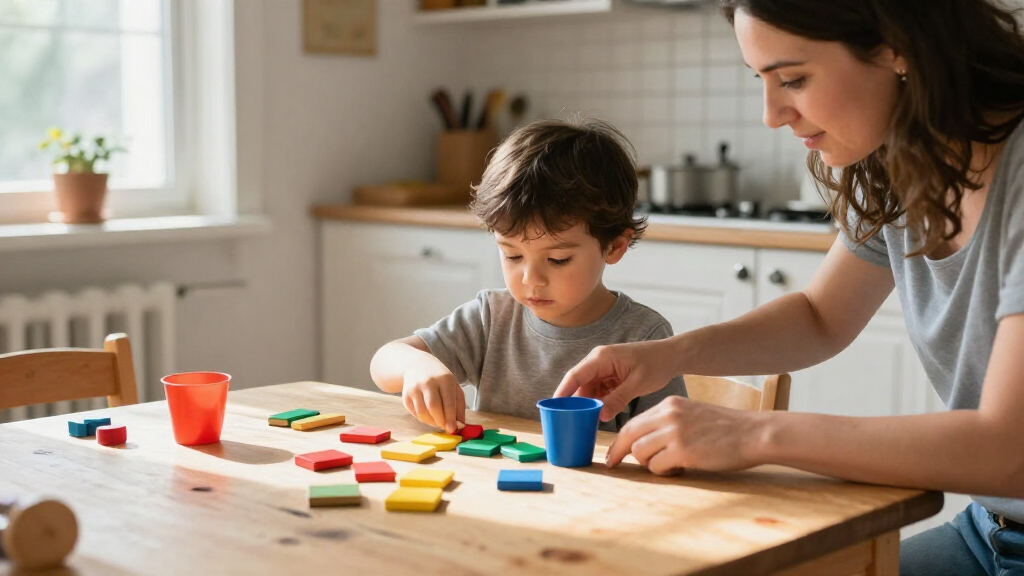
I compared these games by the kind of color task they ask players to do: match, sort, remember, stack, decode, or describe. I also considered the intended age and player setting, how clearly a game supports independent or group play, and whether its format offers variety beyond recognizing colors. Those differences matter more than a long component list: a preschool matching game and a social guessing game solve different play needs.
The ranking favors options with a distinctive, easy-to-understand role and a clear audience. Hues and Cues leads for its flexible group appeal, while Color Code ranks highly for solo logic play; approachable story and shape games follow for early learners. Similar stacking and bottle sets sit lower because their formats overlap, making component details, piece handling, and the intended challenge especially important to check before choosing.
| color matching game | Material |
|---|---|
| MasterPieces Colors & Shapes M | Cardboard |
| The Very Hungry Caterpillar Ra | Cardboard |
| Color Challenge Color-Matching | — |
| Educational Insights Pete the | Cardboard and plastic |
| Learning Resources Color Cubed | Plastic |
| Minoskia 2-Pack Color Matching | Plastic |
| Vodolo Bottle Color Matching G | ABS plastic |
| Color Stack Challenge Color Ma | — |
| Color Matching Challenge Stack | Plastic |
| SmartGames Color Code Transpar | Plastic |
| Vodolo Bottle Color Match Game | ABS plastic |
| FLLOBE Color Challenge Game Se | — |
| 2-Pack Color Matching Challeng | Plastic |
| Hues and Cues | — |
Factors to Consider When Choosing Best Color Matching Games
Before choosing a color game, decide what you want players to do with color. A game built around matching supports a different kind of play than one about describing shades or solving a layered puzzle. These broader checks can help prevent a common mismatch: buying a game that teaches the right skill but does not suit the group, setting, or attention span.
Match the game mechanic to the goal
Color recognition is only one possible goal. Matching and sorting games keep the task direct, which can help younger players build confidence, while memory games ask them to hold visual information in mind. Logic puzzles add sequencing and spatial reasoning, and clue-based games ask players to describe or interpret colors. A common mistake is choosing by the word “color” on the box without checking what players actually do each turn. If the goal is relaxed shared play, a challenging solo puzzle may not fit; if the goal is focused independent play, a noisy group game may be a poor match. Pick the mechanic first, then compare age guidance and components.
Check age fit through the task, not just the label
Age guidance is a starting point, but the real fit depends on how much reading, turn-taking, fine motor control, and sustained attention a game asks of players. Preschoolers may enjoy sorting big, easy-to-handle pieces but lose interest if instructions add several steps. Older children can find a basic match-and-place activity repetitive unless it adds strategy or a changing challenge. Think about whether the child can manage the pieces and follow a full turn without frequent adult help. For mixed-age households, a simple core rule with room for tougher play often works better than a game aimed narrowly at one skill level. Adult support can make a game accessible, but it may also mean the game is not truly independent play.
Choose for the group you actually have
Some color games work best with one player, while others rely on discussion, competition, or several people taking turns. Check the stated player range and consider whether the game remains engaging at its smallest and largest group sizes. A two-player challenge can feel focused, but it may not serve a family game night; a party-style guessing game can lose its appeal when only one person is available. Also think about how long players wait between turns, especially if younger children are involved. If your household changes size from session to session, look for rules that still make sense with a smaller group rather than buying solely for an occasional full table.
Look past piece counts to storage and handling
A large number of rings, cards, tiles, or tokens can create varied setups, but it also means more sorting and more opportunities for pieces to go missing. Small components may be awkward for young hands and need careful storage around toddlers. Before buying, check whether the game includes a tray, rack, or another way to keep pieces organized during play. Lightweight parts can be convenient to carry, yet may be easier to scatter or knock over during a fast challenge. Consider where the game will be played and who will pack it away; a compact set is not automatically the easiest set to maintain. The best component setup is the one your players can handle and reset without turning cleanup into a chore.
Pay for replay variety, not complexity alone
A game can feel more substantial because it has puzzles, cards, or several modes, but those extras matter only if they change how sessions unfold. Repeatedly solving the same kind of match may suit a short learning activity, while older players often benefit from varied challenges, strategy, or open-ended clues. More rules do not automatically mean more replay value; they can also slow down a game that should be quick and accessible. Look for a reason the activity can stay fresh, such as new arrangements, different prompts, or choices that affect the outcome. For a first color game, a straightforward format can be a strength. Paying for added complexity makes more sense when the intended players will use it.
Frequently Asked Questions
Which color matching game is best for a group with different ages?
For a mixed-age group, start with a game where players can contribute at different skill levels rather than one that depends on everyone solving the same puzzle. Hues and Cues gives players room to interpret and discuss color clues, so participation is not limited to fast matching. For younger children, an adult can help explain turns, though older players may need to accept that answers can be subjective. If the group includes very young children, check the small-part warnings and whether the rules allow simplified play. A competitive game can be fun across ages, but only if everyone can take a meaningful turn.
Are matching games or logic puzzles better for teaching colors?
Matching games are the more direct starting point when a child is still learning to identify and sort colors. They make the connection between a color and an action visible, with fewer rules competing for attention. Logic puzzles such as Color Code build on visual recognition by asking players to reason about layers or arrangements. That can be a better fit once color names and distinctions are familiar, or when the goal includes problem-solving. Choose based on the skill the child is ready to practice, not on which format sounds more advanced.
Are bottle and stacking color games suitable for preschoolers?
They can be, but suitability depends on the size of the pieces, the complexity of the challenge, and how closely an adult can supervise. Stacking introduces a hands-on task that may appeal to young children, while bottle games can add memory or sequence demands. Small rings or other loose parts may be a poor fit for children who still mouth objects, so check the product’s age guidance and safety details. A simple setup can be useful for a short activity, but a preschooler may need help resetting the challenge. Choose a set whose pieces are comfortable for the child to handle and whose rules match their attention span.
What should I compare when two listings have similar color-stacking names?
Compare the actual components, player count, challenge materials, and how a turn works instead of relying on the product name. Several options in this roundup use similar color-challenge or stacking language, but a card-and-rack setup may play differently from a simpler stacking set. Check whether the package includes enough pieces for the intended number of players and whether prompts or cards add changing tasks. Also look at storage and piece size, since those details affect daily use more than a small naming difference. If the listings do not make the game flow clear, treat that as a reason to verify the rules before buying.
Should I choose a solo color puzzle or a family color game?
Choose a solo puzzle if the main need is quiet, self-paced play that can build visual reasoning without waiting for other players. Choose a family game if conversation, shared turns, or friendly competition is part of the appeal. Color Code is designed around individual logic challenges, while Hues and Cues centers on group interpretation and discussion. Neither format replaces the other, and a child who enjoys solitary puzzles may not want a social game every time. If you need one purchase to serve both settings, check whether the game supports both independent and shared play rather than assuming it will.
Conclusion
For one standout choice across a range of group settings, I’d start with Hues and Cues as the best overall, especially for players who enjoy talking through different interpretations. Best for beginners goes to Pete the Cat I Love My White Shoes, which connects color play with a familiar story; best for solo logic is SmartGames Color Code. For a value-minded buyer, compare the included pieces and play materials in the two-pack Color Challenge and Color Matching Challenge sets before choosing—the names overlap, so the best fit depends on the specific contents and rules. I’d treat Hues and Cues as the premium-style pick for group interaction, rather than assuming a bigger component count means better play. Choose a story-led match for a young learner, a logic puzzle for independent challenge, or a clue-based game when the table itself is the point.